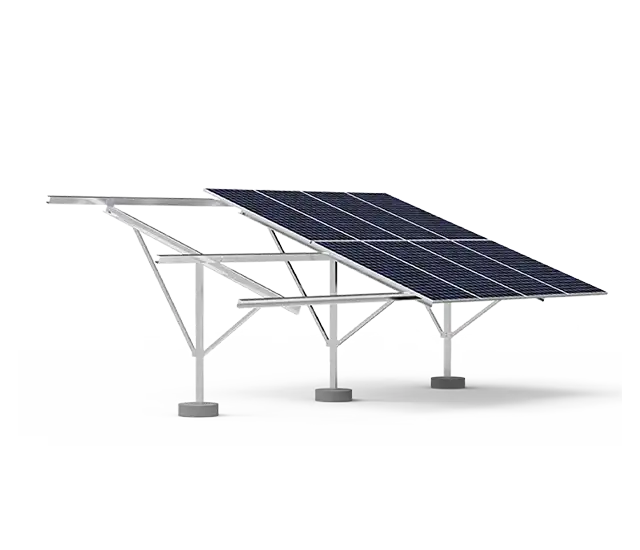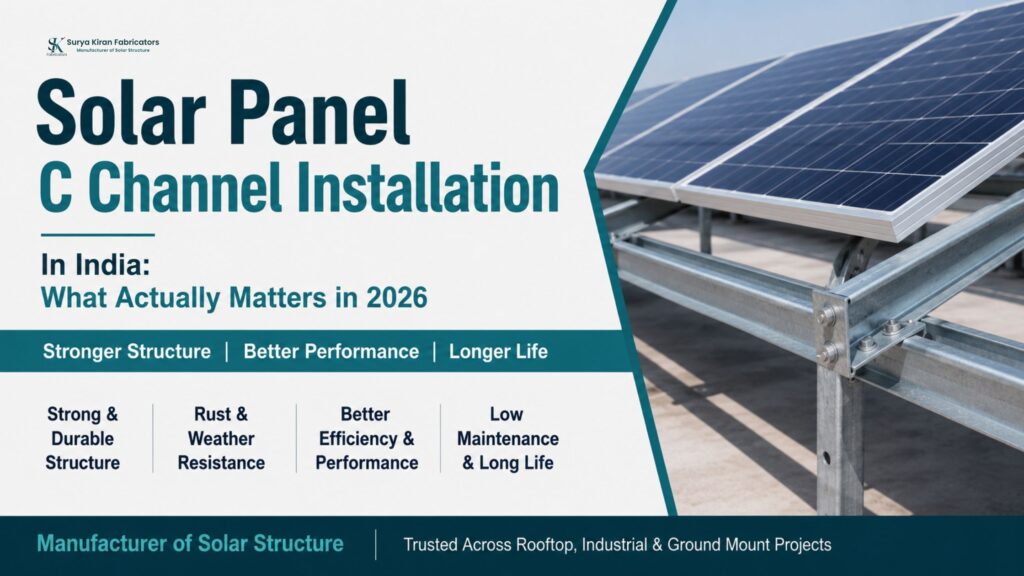
People often spend considerable time evaluating different brands of solar panels, inverters, and batteries while planning a solar project. However, many don’t seem to be bothered about the support structure that holds the entire system.
That’s an issue waiting to be discovered.
For many rooftop and industrial solar projects, the mounting structure becomes the problematic component after a few years, rather than the panels. Solar Panel C Channel Installation that is not well thought out often manifests in laser, poor alignment, and sustained vibrations that lead to the rusting of the structure.
The solar mounting structure business has good prospects as the solar market in India is growing rapidly. Positive shifts in solar panel installation are expected on residential, industrial, schools, warehouses, and farm rooftops. Along with this, the demand and need for durable solar mounting structures are also increasing.
If you are about to begin a solar project and want to learn more about the functioning of solar structures, the following article will update you on the most important aspects of current solar projects.
Importance of Solar Panel C Channel Installation
The solar panel installation’s mounting structure is the foundation on which it all stands, making it the most important component as well.
The C channel is a support structure to which solar panels are mounted. It also aids in the dispersion of load and helps to brace solar panels against expected and unexpected weather forces while keeping the structure intact.
Harsher weather would be an understatement to describe India’s weather. Solar structures are expected to withstand all that and more. Whether it’s the harsh summer heat, monsoon storms, or heavy coastal humidity, mounting solar panel structures continues to remain a challenge.
This is also the main reason why proper Solar Panel C Channel Installation has gained importance in 2026 solar projects.
A good frame doesn’t just sit panels in place.
It protects the entire investment.
What Is C Channel in Solar Panel Installation?
A C Channel is a cross-sectional structural element made from metal. It is widely used in construction and industrial support structures due to its structural strength and load-bearing capacity.
In solar projects, these channels help form the mounting framework for solar panels.
Some of the most common materials for C channels include:
- GI (Galvanized Iron)
- Mild Steel (MS)
- Hot dipped galvanized steel
- Aluminum structures
These structures are heavily used in:
- Residential rooftop solar systems
- Industrial and commercial buildings
- Parking solar structures
- Agricultural projects
- Ground mounted solar systems
In fact, GI channels are preferred for these applications because they offer better corrosion resistance and durability.
C Channel for Solar Panel Mounting: Which Material to Choose?
For most rooftop and industrial projects, hot-dip galvanised (GI) C channel is the preferred choice for solar panel mounting because it resists rust and lasts longer. MS channel is stronger and cheaper but needs proper coating, and aluminium suits lightweight rooftop jobs. Channel thickness, galvanisation quality and local wind load decide the right section.
| Application | Channel section (mm) | Thickness (mm) | Material and finish | Typical use |
|---|---|---|---|---|
| Rooftop rail / purlin | 41 × 41 | 2.0 | GI / hot-dip galvanised | Holds module clamps on RCC and sheet roofs |
| Rooftop leg / column | 41 × 62 | 2.5 | HDG | Sets tilt height on flat roofs |
| Elevated / parking structure | 75 × 40 | 3.0 | HDG | Beams and rafters over open spaces |
| Ground-mount rafter | 75 × 40 | 3.0 | HDG | Main load-bearing member |
| Ground-mount post | 100 × 50 | 3.0 | HDG | Foundation connection, deeper embedment |
Types of C Channel Solar Panel Installation Systems
Rooftop Solar Structures
These are by far the most common in homes and small businesses.
The C channels are mounted on RCC roofs or metal sheds. Proper alignment and tilt angle are extremely important.
Many installers neglect this, and that creates long-term problems.
An aligned rooftop structure means lower maintenance and better solar energy collection.
Elevated Solar Structures
These structures are commonly used in parking lots, commercial buildings, and industrial open spaces.
They generally require:
- Stronger channel thickness
- Better welding quality
- Additional support beams
From a distance, these structures may look simple, but fabrication accuracy matters a lot.
Ground-Mounted Solar Structures
These structures are typically used in large solar farms and agricultural land projects.
The installation of this type of c channel installation becomes more complex because soil condition, wind load, and foundation depth directly impact long-term durability.
Experienced fabricators usually perform detailed site analysis before installation begins.
Things That Matter More Than Price in 2026
It’s natural for people to search for installation cost first.
But experienced solar buyers are now asking smarter questions like:
- Will the structure last for 15 years or more?
- Is the galvanization quality good enough?
- Can it withstand strong wind pressure?
- Is the channel thickness sufficient?
- Will rust become a problem later?
Honestly, these things matter far more than simply choosing the cheapest contractor.
There are many cases where premium solar panels were installed on low-grade structures, and the mounting systems started bending or rusting within a short time.
Repairing structural problems later becomes expensive and frustrating.
Best Materials Used for Solar Structures
GI C Channels
GI C channels are becoming the preferred choice in India.
This is because they offer:
- Better rust resistance
- Longer lifespan
- Lower maintenance
- Strong weather protection
Most modern Solar Panel C Channel Installation projects now prefer galvanized structures for long-term durability.
MS C Channels
MS C channels are stronger and cost-effective but require proper coating and maintenance to avoid corrosion over time.
If MS structures are not finished properly, they may deteriorate faster in humid areas.
Aluminum Structures
Aluminum structures are lightweight and visually cleaner.
They are commonly used in premium rooftop projects where roof load matters.
For heavy industrial use, steel structures are generally preferred.
Common Errors in C Channel Construction
This is one of the biggest reasons solar projects face issues later.
And not because of the solar panels — because of poorly constructed support structures.
Using Thin Channels
Some contractors reduce channel thickness to cut costs.
Initially, everything appears fine.
After storms or prolonged exposure, panels may begin to shift or structures may weaken.
Weak Welding
Poor welding joints reduce structural stability.
In industrial areas with heavy wind pressure, this can become dangerous.
Improper Tilt Angle
The angle of the solar panel determines sunlight absorption.
Incorrect tilt affects overall energy generation.
No Anti-Rust Treatment
This becomes a serious issue during monsoon seasons and in humid regions.
Poor Roof Analysis
Not every roof can handle the same structural load.
Professional installers always inspect roof strength before installation.
What Professional Fabricators Actually Do
Good professionals never perform random channel placements.
Experienced fabricators usually follow a proper process:
- Site inspection
- Roof design analysis
- Load-bearing capacity inspection
- Structure planning
- Custom channel fabrication
- Galvanization or protective coating
- Installation process
- Alignment verification
- Final testing
This is where companies like sk fabricators stand out.
They focus more on structural durability and long-term reliability rather than only completing projects quickly.
Jaipur: The Growing Solar Fabrication Hub
Rajasthan is one of the fastest-growing solar energy states in India.
Interestingly, Jaipur has become a major center for hot dip galvanizing and solar structure fabrication.
That is why many businesses are now searching for a reliable solar structure manufacturer in jaipur.
The region offers:
- Strong industrial fabrication infrastructure
- Availability of skilled fabrication workforce
- Easy access to GI and MS materials
- Growing industrial solar demand
Many large rooftop and factory solar projects across North India now source structures from Rajasthan manufacturers.
Latest Trends in Solar Panel C Channel Installation in 2026
- Hot-Dipped Galvanized Structures
These are becoming the standard because of stronger corrosion resistance and longer lifespan.
- Modular Solar Structures
These structures are easier to expand and maintain.
Perfect for businesses planning future solar expansion.
- Lightweight High-Strength Channels
Designed to reduce roof load while maintaining structural strength.
Especially useful for older commercial buildings.
- Wind-Resistant Structural Designs
After extreme weather conditions across several Indian states, wind-resistant designs are receiving more attention.
How to Choose the Right Solar Structure Installer
Choosing the right installer matters as much as selecting quality solar panels.
Important questions to ask:
- What material grade are they using?
- Do they provide galvanized structures?
- Can they handle industrial-scale projects?
- Do they understand wind load calculations?
- Have they completed rooftop solar projects before?
- Do they provide support and maintenance?
A reliable fabricator usually talks more about structural safety and durability than just pricing.
That’s generally a positive sign.
Maintenance Guidelines After Installation
Many people forget maintenance after installation is completed.
That is a mistake.
Even strong structures require periodic inspection.
Basic Maintenance Checklist
- Inspect bolts and fasteners regularly
- Check weld joints yearly
- Monitor rust near corners and joints
- Remove accumulated dirt and water
- Watch for unusual vibration during storms
Ignoring these inspections may lead to structural weakening over time.
Frequently Asked Questions
1. What is Solar Panel C Channel Installation?
It is the fabrication and installation of a metal mounting structure used to support solar panels on rooftops, industrial sheds, and ground-mounted systems.
2. Which material is best for solar mounting structures?
GI (Galvanized Iron) is widely preferred because of its strong corrosion resistance and long lifespan.
3. How long do solar mounting structures last?
Properly fabricated and galvanized structures can last between 15–25 years with regular maintenance.
4. Is galvanization important for solar structures?
Yes. Galvanization helps protect the structure from rust, moisture, and weather damage.
5. Why is tilt angle important in solar installation?
Correct tilt angle improves sunlight exposure and increases overall solar system efficiency.
Conclusion
The Indian solar industry is growing rapidly in 2026, but strong structural support is becoming equally important.
Many people still focus only on solar panels and ignore the foundation beneath them.
A properly planned Solar Panel C Channel Installation improves safety, stability, and long-term performance while reducing future maintenance issues.
Whether it’s a residential rooftop project or a large industrial installation, the right fabrication and installation process makes all the difference. Also, you can visit Sri Ganganagar C channel Manufacturer.