Quick Answer :
Indian EPC contractors prefer pre-galvanized solar structures for tin shed roofs because they offer the ultimate balance of high strength-to-weight ratio, rapid installation, and cost-per-watt savings. Unlike heavy hot-dip galvanized steel, cold-formed pre-galvanized profiles prevent roof overloading while meeting IS 875 Part 3 wind speed codes. Additionally, pre-slotted unistrut or C-channels eliminate on-site welding and drilling, saving significant labor time and protecting the metal roof from water leakages.
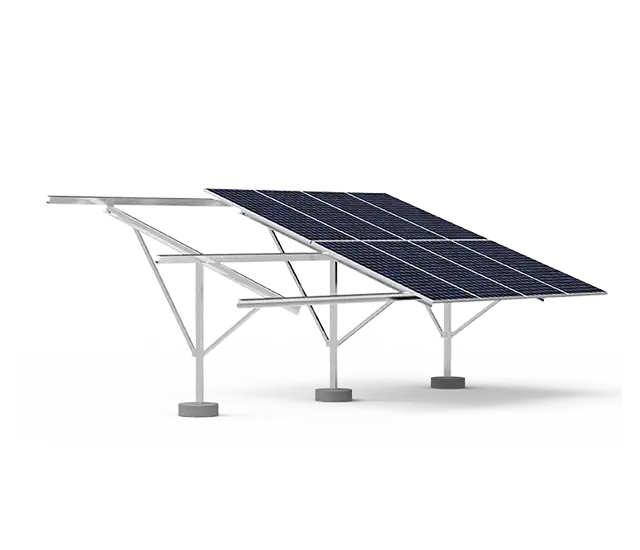
Commercial and industrial rooftops across India are adopting solar energy at a rapid pace. However, the success of these installations relies heavily on the underlying metal framework. While hot-dip galvanized steel remains a traditional option for ground mounts, pre-galvanized structures have become the top choice for tin shed solar structure applications.
As a solar structure tin shed manufacturer, we see engineering, procurement, and construction (EPC) contractors consistently choose pre-galvanized options. This choice stems from a need to balance structural safety, rapid installation speed, and overall project costs.
Understanding Pre-Galvanized Steel for Metal Roofs
Mill-scale automation treats pre-galvanized steel before any fabrication begins. This automated manufacturing method ensures a highly uniform protective layer across the entire surface of the metal.
For outdoor solar installations, contractors specify high-yield structural steel grades like YS 250 or YS 350. They typically combine these grades with a Z275 zinc coating specification. A Z275 rating guarantees 275 grams of zinc per square meter, providing the necessary barrier protection against atmospheric moisture.
This process differs significantly from post-fabrication hot-dip galvanizing, where fabricated steel parts are dipped into molten zinc. Pre-galvanizing delivers a thinner but much more consistent and ductile coating, which makes it perfect for cold-roll forming into precise tin shed solar mounting structure profiles.
Structural Decision Matrix: Pre-Galvanized vs. Hot-Dip Galvanized
To assist procurement teams in making clear structural decisions for C&I projects, this matrix highlights the mechanical and financial differences on metal sheet roofs:
| Engineering Parameter | Pre-Galvanized (GP/GI) Profiles | Hot-Dip Galvanized (HDG) Steel |
| Structural Profile Weight | Lightweight cold-rolled sections optimize roof dead load. | Heavy hot-rolled elements risk overloading shed purlins. |
| Coating Uniformity | Mill-controlled continuous lines ensure identical thickness. | Manual dipping can lead to zinc pooling and uneven dimensions. |
| On-Site Customization | Pre-slotted designs allow instant bolt-on installation. | Requires site cutting/drilling, exposing raw metal to rust. |
| Edge Rust Protection | Sacrificial zinc migration actively heals cut boundaries. | Raw field cuts must be manually coated with zinc-rich cold spray. |
| Procurement Economics | Lower shipping and logistics overhead lowers price per watt. | Higher multi-stage handling costs increase initial cash outlay. |
5 Reasons EPCs Choose Pre-Galvanized Frame Layouts
1. Roof Weight Optimization
Pre-engineered buildings (PEBs) and industrial factories feature strict dead-load limits. Adding heavy structures can jeopardize the integrity of the roof. Pre-galvanized steel undergoes cold-roll forming to create high-strength, thin-gauge profiles.
These lightweight profiles optimize structural efficiency, reducing the physical burden on the shed’s existing purlins. A standard 1 kW solar shed structure made of optimized steel keeps the total weight manageable, safely staying within standard factory roof load limits.
2. Rapid On-Site Assembly
Time directly impacts project profitability during a solar rollout. Pre-galvanized components arrive at the construction site fully formed, pre-punched, and pre-slotted. Installers assemble modular unistrut channels and c-channels quickly using standard spring nuts and bolts.
This system completely eliminates the need for on-site welding, cutting, or drilling. Avoiding field modifications protects the factory-applied zinc coating from accidental damage and keeps the installation moving forward swiftly.
3. Lower Cost-Per-Watt Metrics
The Indian solar sector operates on tight budgets, making tin shed solar structure cost management a top priority. Pre-galvanizing eliminates the secondary logistics of transporting raw black steel to third-party galvanizing plants.
Contractors lower their procurement costs by sourcing factory-direct, pre-coated profiles. Eliminating extra handling steps lowers the overall tin shed solar structure price, helping installers submit more competitive bids.
4. Self-Healing Edge Protection
Contractors often worry about raw edges rusting after factory slitting or punching. Pre-galvanized steel solves this problem through galvanic action.
When moisture hits an exposed edge or a bolt hole boundary, the surrounding zinc naturally migrates to protect the bare iron core. This sacrificial protection prevents rust from spreading across the frame, keeping the structural joints solid for decades.
5. Clean, Professional Appearance
Industrial installations must look professional, especially when designing a solar shed structure near a commercial gateway or a premium tin shed design for house front setups. Pre-galvanized steel offers a smooth, uniform, bright metallic finish.
This clean look matches modern standing seam and corrugated tin roof sheets seamlessly. The neat aesthetic provides a polished appearance that raw, unevenly coated hot-dip metals cannot replicate.
Technical Standards for Indian Manufacturing
When sourcing a solar structure for tin shed projects, engineering designs must handle intense local weather variables. To ensure safety, solar structure tin shed Indian manufacturing facilities engineer every pre-galvanized component to comply strictly with the IS 875 Part 3 wind load code.
[Factory-Direct Coils (JSW / Tata)]
│
▼
[Precision Cold-Roll Forming] ──► Meets IS 875 Wind Codes (Up to 180 km/h)
│
▼
[Pre-Slotted Modular Rails] ──► Integrates with Leak-Proof Roof Clamps
Engineering designs must withstand wind uplift speeds of 150 to 180 km/h, depending on the exact project location. To guarantee this level of safety, manufacturers source high-grade raw coils directly from primary steel producers like JSW Steel or Tata Steel, completely avoiding low-quality scrap metals.
Secure Fixing Mechanisms for Metal Roofs
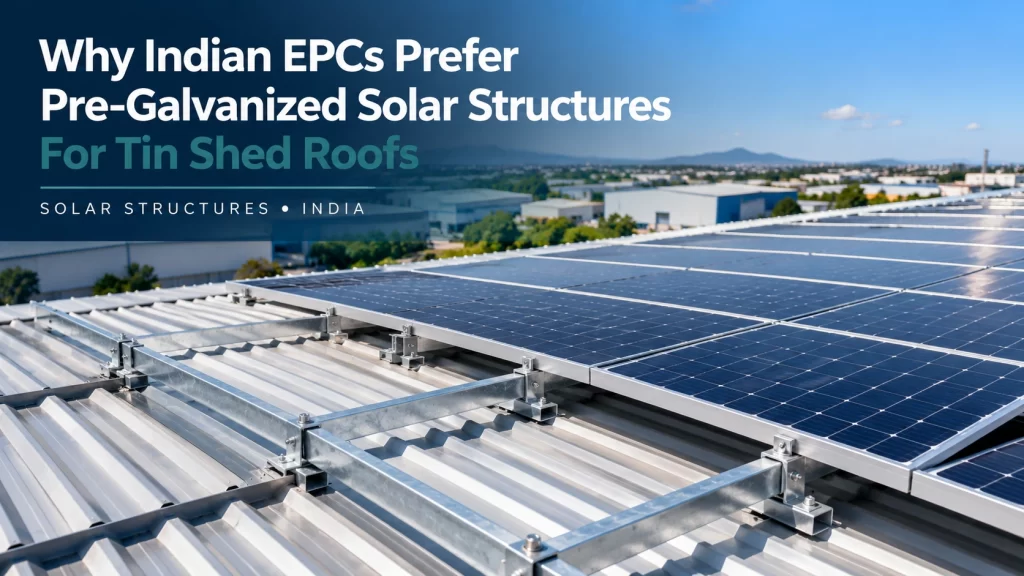
Selecting the correct mounting framework represents only half the battle; the structure must also connect securely to the roof without causing leaks. Engineers match pre-galvanized rails with specialized, non-penetrating standing seam clamps or leak-proof trapezoidal roof brackets.
Installers tilt the structural framework to match the specific solar panel direction and angle required for the city’s latitude. This design allows rain to clean the panels naturally while keeping the underlying tin roof completely waterproof. Whether you plan to mount panels flush or use the solar panel as shed roof layouts, pre-galvanized frames give you the durability you need.
The Verdict
Pre-galvanized structural solutions provide the ideal combination of low weight, structural strength, rust resistance, and affordability for tin shed solar structure in india installations. By choosing factory-engineered components over local site fabrication, Indian EPC contractors protect their solar investments against heavy wind storms and premature corrosion.