
Essential Tips for Solar Module Mounting Structures
The demand for clean and renewable energy has grown significantly in recent years, with solar energy being at the forefront of this revolution. The mounting framework for the solar modules is one of the most important factors that affect a solar power system’s overall performance, longevity, and efficiency. The mounting framework is what keeps solar panels stable, oriented appropriately, and protected in a variety of environmental circumstances, even if the panels themselves absorb sunlight and transform it into power.
Everything you need to know about solar module mounting structures is covered in this article, including their types, composition, advantages, design factors, difficulties, and function in the solar business.
A Solar Module Mounting Structure: What Is It?
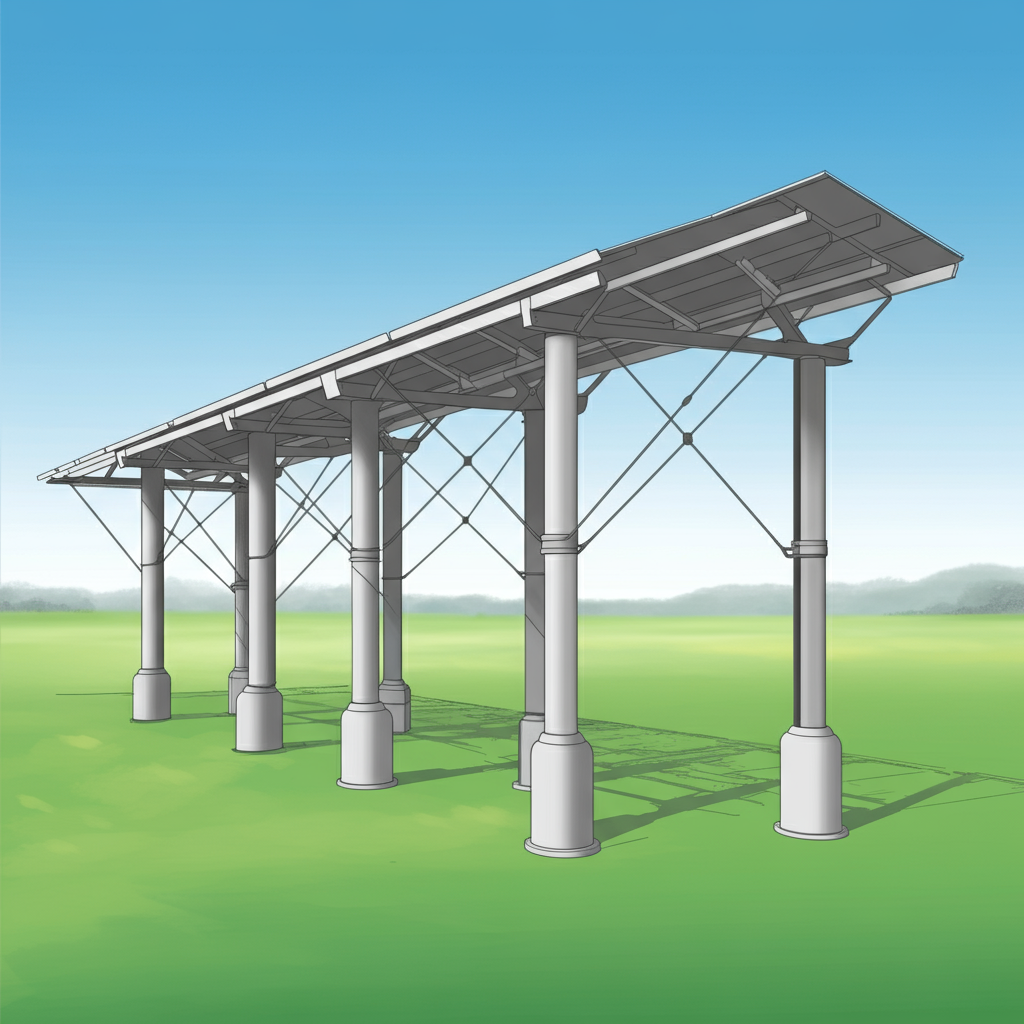
A specially made framework that holds and supports solar panels in a permanent or adjustable position is called a solar module mounting structure. It guarantees that the panels are firmly fixed in the proper orientation and angle to get the most sunlight possible. Depending on the type of project, these structures can be placed on the ground, rooftops, or other surfaces.
Simply said, the mounting structure is the foundation of every solar installation, influencing not only the energy generation efficiency but also the maintenance and safety needs over the long run.
The Value of Structures for Mounting Solar Modules
1. Security and steadiness
Stability and safety for solar panels are two of a solar module mounting structure’s most crucial functions. Panels must endure severe winds, torrential rain, dust storms, and, in certain areas, snow loads, because they are exposed to outside environments. Panels are kept firmly in place by a well-designed mounting structure, avoiding damage, mishaps, or energy waste from moving or misalignment.
2. Optimised Production of Energy
In order to maximise sunlight capture, mounting structures are made to position solar panels at the best tilt angle and orientation. Although even a slight misalignment can lower efficiency, panels with the proper construction get the best exposure possible all day long. The structure plays a crucial role in optimising return on investment since it leads to increased power output and improved system performance overall.
3. Sturdiness
The mounting framework must be able to withstand the anticipated 20–25-year lifespan of solar panels. Mounting systems make sure that the complete solar setup is dependable and long-lasting for decades by utilising sturdy, corrosion-resistant materials like aluminium or galvanised steel. Because a weak or badly constructed structure could limit the system’s life, durability is an important consideration.
4. Maintenance Ease
The purpose of appropriate solar module mounting structures is to facilitate maintenance procedures, including cleaning, inspections, and replacements. They offer access points and sufficient distance between panel rows, enabling technicians to work securely without having to disassemble the system. This guarantees the panels run as efficiently as possible while also lowering long-term maintenance expenses.
5. Flexibility
Terrain, rooftop design, and environmental factors vary from one solar project to the next. In order to adapt panels to these various environments, mounting structures are essential. The versatility of mounting structures makes solar energy affordable and useful for a wide range of applications, whether it is installed on an urban rooftop, on a ground-mounted system in an open field, or on floating panels on a reservoir.
What are the Types of Structures for Mounting Solar Modules?
1. Structures for Rooftop Mounting
For both residential and commercial solar installations, rooftop mounting structures are one of the most popular options. They are made to safely support solar panels on roofs that are level or sloping without endangering the structural soundness of the building. Sloped rooftops need specific brackets and rails that match the roof’s angle, whereas flat rooftops are often mounted using ballast or anchor-based installations. Rooftop mounting systems are perfect for urban environments with limited ground area since they maximise the use of underused roof space and lower electricity costs.
2. Structures Mounted on the Ground
Large-scale solar farms and projects without rooftop space can benefit from ground-mounted solar module mounting systems since they are put directly on open land. These structures can be classified as either seasonal tilt systems, where the tilt can be changed a few times a year to improve energy capture, or fixed-tilt systems, where panels are positioned at a constant angle. Ground-mounted systems may be maintained without disturbing habitations, are simple to scale, and improve airflow around panels.
3. Structures Mounted on Poles
Solar panels are fixed on one or more poles that are fastened to the ground in pole-based solar installations. They are usually utilised in off-grid, rural, or agricultural locations with lots of open terrain. Pole mounts can accommodate bigger arrays or smaller residential systems, depending on the design. In comparison to ground installations, pole-mounted systems have the major advantage of raising panels above the ground, which lowers the possibility of shade from surrounding objects and keeps panels cleaner.
4. Solar Mounts That Float
An inventive kind of solar module mounting system called a floating solar mount enables panels to be erected on platforms that float above bodies of water, such as lakes, reservoirs, or ponds. These methods are especially helpful in areas where land is scarce. In addition to producing renewable energy, floating solar structures can increase panel efficiency by lowering water evaporation because the water below keeps the system cool. As a space-efficient and ecological option, this kind of building is becoming more and more well-known worldwide.
5. Monitoring Platforms
Tracking systems are sophisticated mounting devices for solar modules that move panels to follow the course of the sun throughout the day. Unlike fixed mounts, single-axis trackers enable panels to wander from east to west, guaranteeing longer exposure to sunshine. By rotating panels in both east-west and north-south directions, dual-axis trackers go one step further and allow for year-round maximum solar capture. These systems are popular in large-scale solar farms because they greatly boost energy-generating efficiency, despite the fact that they demand a larger initial investment and ongoing maintenance.
Materials for Mounting Structures for Solar Modules
The material selection has a significant impact on the structure’s lifespan and performance. The materials that are most frequently utilised include:
1. Galvanised steel: Often utilised in huge solar farms, this material offers strength and resistance to corrosion.
2. Aluminium: Perfect for rooftop installations, aluminium is lightweight, strong, and resistant to rust.
3. Stainless Steel: This material is more costly but offers excellent corrosion resistance.
4. Concrete Ballast: When drilling into the roof is not practical, this material is used for non-penetrating roofing systems.
Every material has benefits, and the choice is influenced by factors including project size, cost, and environmental factors.
Design Factors for Structures Used to Mount Solar Modules
To guarantee efficiency and safety, careful engineering and planning are needed when designing a solar mounting system. Important things to think about are:
1. Angle of Tilt
Depending on the region, the tilt angle should be adjusted to maximise sunlight. For instance, the best results are frequently obtained in India when the tilt is equal to the latitude angle.
2. Orientation
Panels should ideally face north in the Southern Hemisphere and south in the Northern Hemisphere.
3. Snow and Wind Loads
In some areas, structures must survive snow buildup and strong winds. Engineers are required to adhere to local building norms and codes.
4. Resistance to Corrosion
Materials used in panels must withstand rust and deterioration over time due to their exposure to severe weather conditions.
5. Distribution of Weight
In order to prevent roof damage, the construction of rooftop systems needs to distribute weight equally.
6. Simplicity of Upkeep and Installation
A well-designed panel makes wiring, cleaning, and replacement simple.
7. Economic Effectiveness
For a solar project to be financially viable, the construction should strike a balance between affordability and durability.
Conclusion
The unsung hero of any solar installation is a mounting structure for the solar modules, which may not be as flashy or noticeable as the solar panels themselves. The success of a solar power project is largely dependent on the mounting structure, which also affects stability, efficiency, and long-term expenses.
Mounting structures should grow stronger, lighter, and more versatile as technology develops, aiding in the world’s shift to renewable energy. To fully utilise solar energy, whether for a small rooftop project or a large solar farm, it is essential to invest in a dependable solar module mounting system.