

Understanding Solar Structure Manufacturing: A Deep Dive
The global race for cleaner, greener energy has placed solar power at the forefront of the renewable revolution. But while shiny solar panels bask in the spotlight, it’s the humble solar support structure that does the heavy lifting—literally. These engineered frameworks hold solar panels in place, brave the elements, and ensure optimal performance for decades.
Manufacturing high-quality solar structures is about far more than just bending metal; it’s a nuanced, precise process that underpins the entire solar array’s safety, efficiency, and longevity. If you’re considering a solar project, whether for your home, business, or utility-scale farm, understanding how these structures are made—and why manufacturing quality matters—can make all the difference.
In this blog post, we’ll peel back the layers of solar structure manufacturing. From design and material selection to fabrication, innovations, challenges, and how to pick the right manufacturer, consider this your comprehensive guide to the backbone of solar energy systems.
What Are Solar Structures?
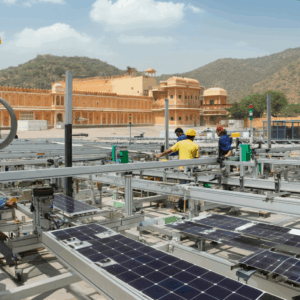
Before we wade into the technical waters of manufacturing, let’s clarify what solar structures actually are. Solar support structures are engineered frames that securely hold solar panels in place. They’re designed to withstand wind, rain, snow, seismic events, and the test of time—all while ensuring that panels maintain their optimal angle to the sun for maximum energy output.
- Definition: Solar structures are physical frameworks that support and fix photovoltaic (PV) panels or solar thermal collectors in a desired orientation.
- Main Functions:
- Provide mechanical support and stability
- Maintain the correct tilt and orientation for energy efficiency
- Enable easy installation, maintenance, and replacement of panels
- Key Components:
- Mounting Systems: The core of any solar structure, these include ground mounts, roof mounts, and pole mounts, tailored to the installation site.
- Frames: The skeletons that cradle individual panels, often engineered for modularity and rapid assembly.
- Tracking Mechanisms: Optional systems that allow panels to follow the sun’s movement, boosting energy capture by 15–30% compared to fixed-tilt systems.
- Common Applications:
- Residential: Rooftop or backyard systems powering homes
- Commercial & Industrial: Rooftop or carport arrays for businesses, warehouses, schools, and factories
- Utility-Scale: Massive solar farms spanning acres, often using advanced ground-mounted systems and trackers
In other words: Without strong, well-designed structures, your solar panels would be going nowhere fast—or worse, somewhere you definitely don’t want them to go during the first windstorm.
The Manufacturing Process: Step by Step
Building a reliable solar structure isn’t just about assembling some metal bits and calling it a day. It’s a multi-step process that demands precision, engineering know-how, and a rigorous commitment to quality at every stage. Let’s break down the process.
1. Design & Engineering
Every site is unique—different soils, climates, building codes, and customer requirements. That’s why the process typically begins with deep-dive engineering and customization.
- Customization: Engineers assess site conditions (wind speed, snow load, seismic risk, roof type, etc.) and customer preferences to tailor the structure’s design.
- Structural Integrity: Advanced modeling software simulates real-world stresses, ensuring the structure can stand up to Mother Nature’s moods.
- Efficiency: Design choices impact installation time, maintenance needs, and energy capture (especially with trackers).
A strong design not only keeps your panels safe but also makes your investment pay off for years to come.
2. Material Selection
Not all metals are created equal, especially when they’re expected to endure decades outdoors. The choice of material is a balancing act between cost, durability, and environmental impact.
- Steel: The most common option for ground-mount and utility-scale structures. It’s robust, widely available, and offers excellent strength-to-cost ratio. Galvanized steel resists corrosion, making it ideal for harsh climates.
- Aluminum: Lightweight, naturally corrosion-resistant, and easy to transport and assemble. A top pick for rooftop and carport installations where weight is a concern.
- Composite Materials: Innovations are bringing in fiber-reinforced polymers and hybrid materials for high-performance or niche applications.
- Factors Influencing Choice:
- Local climate and environmental conditions
- Budget and project size
- Desired lifespan and maintenance requirements
- Sustainability goals
Material selection is where the foundation of quality truly begins—quite literally!
3. Fabrication Techniques
Once materials are finalized, the real magic happens in the fabrication hall. Here, raw steel or aluminum is transformed into precision components through a blend of expert craftsmanship and cutting-edge machinery.
- Cutting: High-speed saws, laser cutters, or plasma torches slice material to exact dimensions.
- Bending/Forming: Hydraulic presses and rollers shape beams, rails, and brackets to strict tolerances.
- Welding: Skilled technicians or robotic welders join sections for added strength and rigidity.
- Drilling & Punching: Holes are created for bolts and fasteners, often with CNC-guided precision.
- Quality Control: At every stage, inspections ensure compliance with engineering drawings, dimensional accuracy, and weld strength. Non-destructive testing (NDT) methods may be used for critical joints.
Meticulous fabrication is the difference between a structure that sails through decades—and one that could let you down when it matters most.
4. Surface Treatment & Coating
Even the toughest steel will rust if left exposed to the elements. That’s where surface treatments come into play, giving solar structures the resilience to shrug off rain, snow, salt, and sun.
- Galvanization: A process where steel is dipped in molten zinc, creating a protective barrier that prevents corrosion. This is the gold standard for outdoor solar structures.
- Powder Coating: A dry, powder-based paint is electrostatically applied and then cured under heat. It delivers a tough, colorful finish that resists chipping, scratching, and fading.
- Anodizing: Common for aluminum, this electrochemical process thickens the natural oxide layer, boosting corrosion resistance.
- Quality Assurance: Coatings are tested for thickness, adhesion, and uniformity. After all, even a microscopic flaw can become a rust spot over time!
Proper surface treatment is the unsung hero behind solar installations that look—and perform—like new for decades.
5. Assembly & Packaging
The final steps before shipping involve partial assembly (when possible) and secure packaging to protect every component in transit.
- Pre-Assembly: Some manufacturers pre-assemble subcomponents or kits at the factory to reduce on-site labor and minimize errors.
- On-Site Assembly: Larger or custom projects may require components to be assembled
solar-1
- Top 10 Solar Structure Manufacturers in India
- Goodluck India, Arctech, GameChange Solar, Raydean Industries, Strolar Mounting Systems, Pennar Industries, Waaree Energies, JSW Steel Coated Products, SNS Corporation, and skfabricators.
- Top Solar Structure Manufacturers in IndiaThe same as above, with Goodluck India and Arctech leading the market.
- Solar Structure Manufacturers Near Me:This depends on your location. Companies like Waaree Energies and Strolar have a pan-India presence.
- List of Solar Structure Manufacturers in IndiaGoodluck India, Arctech, GameChange Solar, Raydean Industries, Strolar, Pennar Industries, Waaree Energies, JSW Steel Coated Products, SNS Corporation, and Ganges International, skfabricators.
- Solar Structure in IndiaSolar structures in India include rooftop, ground-mounted, floating, pole-mounted, carport, and tracking systems.
- Solar Structure in India ProjectsMajor projects include rooftop installations, floating solar plants like the one in Ramagundam, Telangana (100 MW), and large-scale ground-mounted solar parks.
- Solar Structure Price in IndiaPrices vary by type and capacity. For example, rooftop structures cost ₹8,000-10,000 per kW
- 3 kW Solar Structure Price in IndiaApproximately ₹24,000-26,000.
- Solar Structure ManufacturerLeading manufacturers include Goodluck India, Arctech, and Strolar.
- Types of Mounting Structures for Solar PanelsRooftop, ground-mounted, floating, pole-mounted, carport, smartflower, and tracking system mounting structures.