
Key Factors in Solar Structure Design Calculations
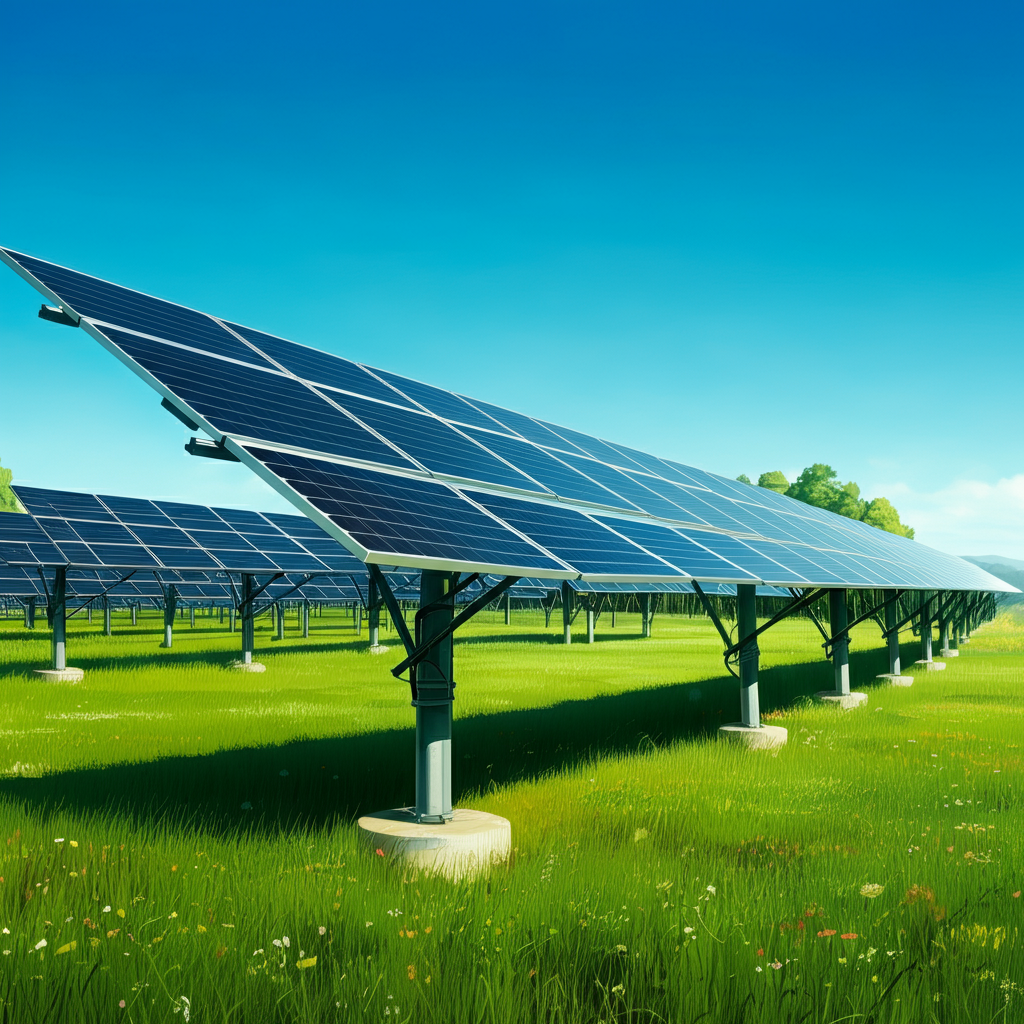
Solar power is becoming one of the most well-liked and dependable types of sustainable electricity generation due to the increased attention being paid to renewable energy on a worldwide scale. Because of its adaptability, scalability, and capacity for large-scale power generation, the ground-mounted solar structure has drawn the most attention among the different kinds of solar installations. Ground-mounted systems are perfect for utility-scale, commercial, industrial, and residential solar farms since they are installed directly on the ground using specially made mounting structures, unlike rooftop solar panels.
A Ground-Mounted Solar Structure: What Is It?
A framework intended to support solar panels on the ground as opposed to rooftops or walls is known as a ground-mounted solar structure. Concrete foundations, metal poles, or screw piles are used to anchor these constructions into the ground, guaranteeing their stability and longevity in the face of weather conditions, including wind, rain, and snow. They are a popular option for large-scale solar energy generation since they may be placed in open spaces that receive direct sunshine.
A ground-mounted structure’s main goal is to maximise energy output all year long by giving solar panels the proper tilt angle and orientation. Because of their adaptability, these systems can be used in a variety of settings with varying soil types, power needs, and terrains.
Types of Solar Structures Mounted on the Ground
1. Ground Mounts with Fixed Tilt
All year long, solar panels are held at a consistent angle by fixed tilt mechanisms. They are easy to use, reasonably priced, and need little upkeep. In order to maximise annual energy generation, the tilt angle is often calculated based on the site’s latitude.
2. Tilt mounts that can be adjusted
Users can manually alter the solar panels’ inclination according to the season with adjustable tilt devices. Although it involves some physical labour, this guarantees increased efficiency by adjusting panel orientation during the summer and winter.
3. Systems for Single-Axis Tracking
Single-axis trackers follow the sun’s daily course by rotating solar panels along a single axis, often from east to west. They are popular for utility-scale solar farms because they produce 15–25% more electricity than fixed systems.
4. Systems for Dual-Axis Tracking
Throughout the year, dual-axis trackers move solar panels in both horizontal and vertical directions, lining them up with the sun’s location. They provide the highest efficiency and largest energy yield, although they are more costly.
5. Ground Mounts with Ballast
Installing ballasted systems on the ground requires no soil penetration. Rather, the structure is secured by weights or massive concrete blocks. They are perfect for locations where drilling or excavation is impractical due to delicate ground conditions.
A Ground-Mounted Solar Structure’s Components
Several essential elements make up a ground-mounted solar structure, which guarantees stability, longevity, and effectiveness:
1. The photovoltaic modules: They absorb sunlight and transform it into electrical power are called solar panels.
2. Mounting Rails & Frames: Metal frameworks that firmly support panels, typically made of galvanised steel or aluminium.
3. Foundation System: The weight of the structure is supported by driven poles, screw piles, concrete blocks, or anchors.
4.The bolts, nuts, and clamps: They secure solar panels to the mounting rails are known as fasteners and clamps.
5. Tracking Mechanism (Optional): Single-axis and dual-axis trackers use motors and sensors.
6. Inverters & Cabling: These electrical parts link the solar array to the grid and transform DC to AC.
Important Considerations for Ground-Mounted Solar Structure Design
Engineers must take into account several technical and environmental aspects while creating a ground-mounted solar structure:
1. Site Location & Sunlight Exposure: Locating regions with the most sun radiation and the least amount of shade.
2. Soil Conditions: To select the best foundation (ballasted, concrete, or screw piles), test the stability of the earth.
3. Tilt Angle & Orientation: Identifying the ideal tilt angle to provide the highest possible yearly energy yield.
4. Designing structures: To endure high winds, torrential rains, and snow buildup is known as wind load and snow load.
5. Corrosion Resistance: For long-term performance, use anti-rust coatings and sturdy materials.
6. Land Utilisation: Effective layout design to minimise land consumption and optimise electricity generation.
7. Scalability: Creating modular solutions that enable the solar farm to grow in the future.
What are the Benefits of Solar Structures Mounted on the Ground?
1. Greater Efficiency: Compared to rooftop systems, ground installations can be oriented at the optimal tilt angle to maximise sunshine exposure.
2. Scalability: Fits both big commercial solar farms and tiny household installations.
3. Cooling Effect: Aboveground panels feature improved airflow, which lowers overheating and boosts efficiency.
4. Flexibility: It can be set up in vast fields, agricultural land, and hilly terrain.
5. Simple Maintenance: Because the panels are reachable from the bottom floor, cleaning and repairs are made simpler.
6. Durability: Designed to endure severe weather conditions, this product has a 25–30 year lifespan.
What are the Problems with Solar Structures Mounted on the Ground?
1. Land Requirement: It is not appropriate for highly populated urban areas due to its substantial land space requirements.
2. Greater Installation Cost: Upfront expenses for excavation, foundations, and structural materials rise.
3. Environmental Issues: If land clearing for solar farms is not done carefully, it may have an impact on biodiversity.
4. Security Risks: In exposed locations, ground-level installations could be the target of theft or vandalism.
5. Permits & Regulations: It can take a while to get government approval for extensive land use.
How Ground-Mounted Solar Structures Are Installed?
1. Site Survey & Feasibility Study: Evaluating land appropriateness, soil composition, and sunshine exposure.
2. Design & Engineering: Producing unique designs according to site circumstances and energy needs.
3. Preparing the foundation involves drilling or excavating holes for screw piles or concrete.
4. Mounting Structure Assembly: Setting up support beams, rails, and frames.
5. Panel Installation: Fastening solar panels to the rails for mounting.
6. Electrical Setup: cabling connections, inverters, and wiring panels.
7. Inspection and Commissioning: Before activation, the system is tested for effectiveness and safety.
The price of solar structures installed on the ground
A ground-mounted solar structure’s price is determined by several factors:
• Mounting System Type: Dual-axis trackers are more expensive than fixed mounts.
• Material Used: Galvanised steel and aluminium are popular options that have an impact on cost and longevity.
• Land Costs: Purchasing or renting land raises the overall project costs.
• Installation Fees: Labour, foundation, and excavation expenses differ by location.
• System Size: Compared to huge utility-scale projects, residential systems (5–10 kW) are substantially less expensive.
Although ground-mounted solar installations typically cost between 10% and 25% more than rooftop solar systems, they frequently result in longer-term savings and higher efficiency.
What are the Uses for Solar Structures Mounted on the Ground?
1. Residential Solar Farms: Small ground-mounted systems for individual electricity use can be installed by homeowners with open land.
2. Commercial Installations: Companies can save on their electricity costs by using huge ground systems.
3. Industrial Use: Large-scale solar farms provide a reliable power source for factories and manufacturing facilities.
4. Utility-Scale Solar Power Plants: These are big solar farms that feed power straight into the grid.
5. Agri-Photovoltaics on Agricultural Land: Farmers install solar panels while continuing to grow crops underneath them.
Ground-mounted solar structures’ future
Ground-mounted solar systems will play an increasingly important role as the demand for renewable energy continues to climb globally. It is anticipated that developments in smart grid integration, solar tracking technology, and sustainable land-use techniques would further increase productivity and cut expenses. Furthermore, ground-mounted systems will be more successful with the introduction of bifacial solar panels, which produce power from both sides.
Ground-mounted solar farms are a desirable investment for the future since governments all over the world are providing subsidies, tax breaks, and incentives for renewable energy.
Conclusion
In contrast to conventional rooftop systems, the ground-mounted solar structure offers flexibility, scalability, and high efficiency, making it a crucial invention in the field of solar energy. They are a great option for residential, commercial, and industrial projects due to their durability and long-term energy output, even if they demand more land and a larger initial expenditure.
When switching to renewable energy, people and organisations can make better judgments if they are aware of the design considerations, installation procedure, and pricing concerns. The global energy landscape will be significantly shaped by ground-mounted solar arrays as the globe transitions to a more sustainable future.