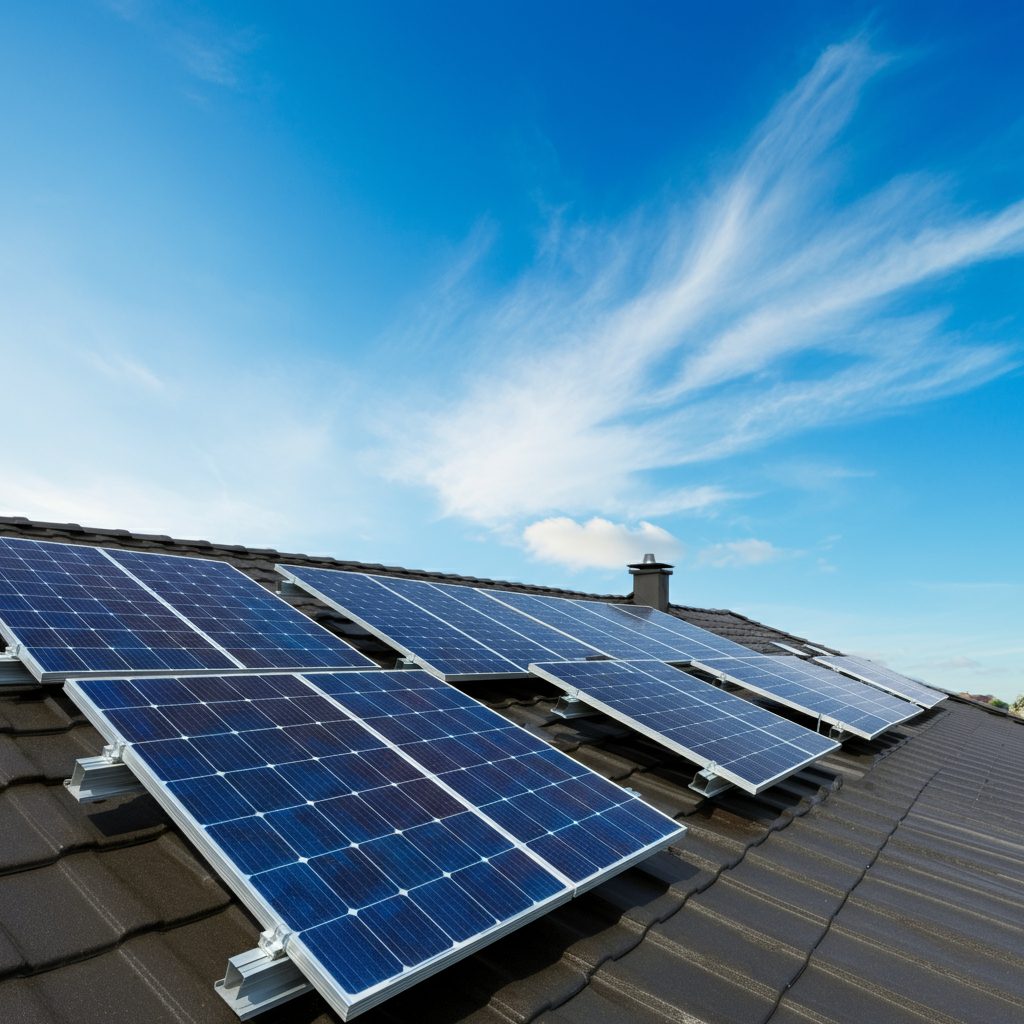
Rooftop solar systems are now a common and useful option for both residential and commercial structures due to the growing need for clean and renewable energy. A carefully thought-out solar structure design is essential to any rooftop solar installation’s success. The solar panels are held firmly in place by this structural framework, which also guarantees long-term safety, durability, and optimal performance.
We cover every aspect of solar structure design for rooftops in this comprehensive guide, including design types, materials, installation methods, standards, advantages, and useful advice to assist businesses, homeowners, and solar experts in making wise choices.
What is Rooftop Solar Structure Design?
The engineering and construction of a support system that firmly holds solar panels on the roofs of residential, commercial, or industrial buildings is known as solar structure design for rooftops.
In order to optimise sunlight exposure, boost energy efficiency, and endure a variety of weather factors, including wind, rain, and seismic activity, this design makes sure that the solar panels are positioned at the ideal angle and orientation.
In order to ensure both performance and safety over the system’s lifespan, a well-planned rooftop solar structure considers elements like as the roof’s load-bearing capacity, material type, panel layout, tilt angle, and simplicity of maintenance.
Rooftop Solar Structure Types
Solar Structures with Flat Roofs
Buildings with horizontal rooftops, which are frequently found in commercial, industrial, and some residential contexts, are the perfect fit for flat roof solar installations. These structures make it simpler to maximise solar exposure based on geographic location by providing flexibility in panel orientation and tilt angles.
Common designs include fixed tilt mounts, in which panels are set at a constant angle, and ballasted mounts, which use weights, such as concrete blocks, to hold the structure in place without piercing the roof.
In order to improve energy generation all year long, several systems additionally provide seasonal tilt adjustment. In order to help with cooling and performance, flat roof designs frequently offer better airflow beneath the panels and simpler maintenance access.
Solar Structures with Sloped Roofs
Usually found in residential buildings, sloped roof structures are specially made to match the pitch of the existing roof. In these systems, solar panels are positioned on customised rails that raise them just enough for improved ventilation, or flush with the roof surface. Because they preserve the roofline, flush mounts are frequently used in projects that prioritise aesthetics, although rail-based mounts offer more strength and adaptability.
Non-penetrating clamp mounts are used for metal sheet roofs in order to prevent damage and guarantee watertightness. In order to accommodate the panel configuration and provide safe anchoring without sacrificing roof integrity, sloped roofs present a difficulty.
Canopy or Elevated Solar Structures
Raised installations constructed over the current roof surface, elevated or canopy solar structures, provide more usable space beneath the panels. When usable surface area is restricted by roof impediments such as vents, air conditioners, or water tanks, these structures are very helpful. Additionally, they can be used for two purposes, such as shading or covering walkways, parking lots, or terraces.
Canopy structures are made to withstand greater weights and wind speeds and provide better cooling and ventilation for the panels, increasing efficiency. Their versatility and dual-use nature make them more and more desirable in urban environments, even though they need more engineering and materials.
Important Elements of a Rooftop Solar System
A solar structure is made up of various engineered parts:
1. Rails for mounting
The panels are held in place by these vertical or horizontal frameworks. Materials: steel (stronger, more durable) or aluminium (lightweight, resistant to corrosion).
2. Clamps & Brackets
used to fasten the rails to the base structure and the panels to the rails. They need to be adjustable and resistant to corrosion.
3. Anchors or Base Plates
Secure the building to the roof’s surface. These need to work with the type of roof (metal sheet, tile, or RCC).
4. Bolts and Fasteners
Make sure the panels and structure are securely fastened. For outdoor durability, stainless steel fasteners are recommended.
5. Mechanisms of Tilt
In flat roof systems, adjusting the panel angle for the best solar incidence is optional but helpful.
Get Detailed Information About Solar Panel Structure: Components, Materials and Types
Design Factors for Solar Structures on Rooftops
1. Type of Roof and Capacity to Support Weight
Selecting the appropriate mounting type requires an understanding of your roof’s structure, including its RCC, metal sheet, tile, etc. The roof’s ability to support the system’s additional load must be assessed by engineers.
2. Seismic Zone and Wind Load
Additional bracing, anchoring, or even aerodynamic design changes are required in seismically active or wind-prone places.
3. Tilt angle and panel orientation
For optimal sun exposure in India, solar panels should be directed southward with a tilt angle of between 10° and 30°, depending on the location’s latitude.
4. Analysis of Shading
Solar pathfinder tools should be used to examine shade from surrounding structures, trees, water tanks, or antennas before completing the design.
5. Maintenance Access
Panels and wiring should be easily and safely accessible for cleaning and examination.
6. Water Flow and Drainage
Make sure the design doesn’t obstruct the roof’s natural rainfall drainage. To permit flow, use elevation or water channels.
Materials for Solar Structures on Rooftops
Aluminum
Because it is lightweight, corrosion-resistant, and simple to install, aluminium is one of the most widely utilised materials in rooftop solar installations. For residential installations where the total load on the roof must be kept to a minimum, it is particularly recommended.
Because aluminium doesn’t rust, it can be used outdoors for extended periods, even in wet or humid environments. Better aesthetics and adaptability for different roof types are also facilitated by its sleek appearance and flexible design. Aluminium structures are a little more costly than some alternatives, but they require less upkeep and have a lifespan that frequently equals or surpasses that of the solar panels.
Iron Galvanised (GI)
Rooftop solar mounting systems frequently use galvanised iron (GI) due to its affordability, strength, and longevity. It is made by applying a layer of zinc on steel or iron, which prolongs the metal’s life and prevents corrosion. Because they provide a strong foundation that can endure severe wind loads and environmental stress, GI structures are perfect for both residential and commercial situations.
GI is more economical and offers superior structural support, particularly for big installations, while being heavier than aluminium. Long-term performance may require routine examination and maintenance, especially in coastal regions where the air contains a lot of salt.
Hot Dip Galvanised Steel
Due to its exceptional resistance to corrosion and long-lasting durability, hot-dip galvanised steel is frequently used for solar projects in industrial, coastal, and high-humidity environments. By submerging steel in molten zinc, a thick, consistent layer that guards against rust and weather-related damage is created.
Because of its strength and ability to bear heavier loads, hot-dip galvanised steel structures are appropriate for rooftop installations that are raised or canopy-style. Despite being more costly and heavier than alternative solutions, they are a wise investment for large-scale or vital solar installations due to their more than 25-year lifespan.
Stainless steel
For rooftop solar installations where exceptional strength, corrosion resistance, and endurance are crucial, stainless steel is the best option. Coastal locations, heavy industrial zones, and areas with extreme weather conditions are just a few of the challenging environments in which it excels. Long-term safety and performance are ensured by stainless steel’s low maintenance requirements and resistance to rust and structural deterioration.
However, its application is restricted to high-value or mission-critical installations because of its much higher cost compared to galvanised iron or aluminium. Because of its exceptional mechanical qualities, it is perfect for specific solar mounting applications where dependability is crucial.
Conclusion
A robust, secure, and effective solar structure design is essential to the success of any rooftop solar project. Every design component is essential to the installation’s long-term viability, from selecting the best mounting system to guaranteeing appropriate load handling and wind resistance.
Making the most of your solar journey requires knowing the basics of solar structure design for rooftops, whether you’re a business investing in energy savings or a homeowner trying to go green. To ensure performance and safety, always collaborate with certified professionals and make sure local requirements are followed.