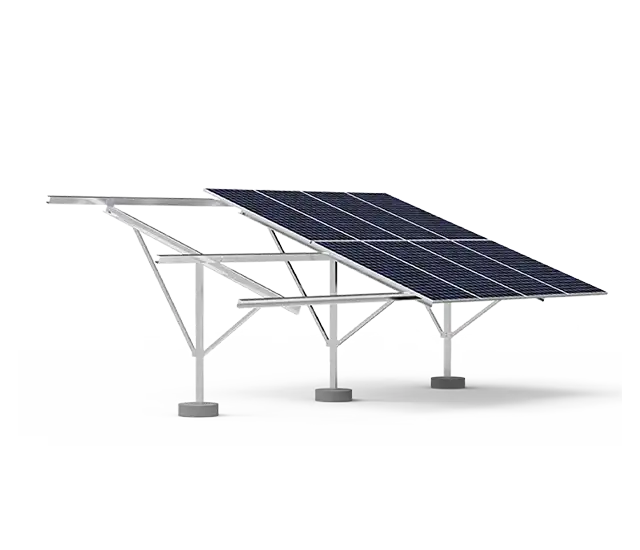
When buying solar panels, customers focus on the brand, the efficiency, the warranty, and the price. The frame is the part that most customers can see, so it makes sense. But few customers think about the support system that goes under the panels.
Support systems do a lot of the work
I’ve worked on plenty of projects that place the most expensive panels on the cheapest modules, and I have seen those projects develop issues. Things like loose fittings and bending happen. Issues like alignment happens after a stiff wind. Those things do not happen abruptly. They happen gradually until it costs a lot of money to repair.
Support systems that do their job well do not attract attention. But support systems that do not do their job well will absolutely be seen.
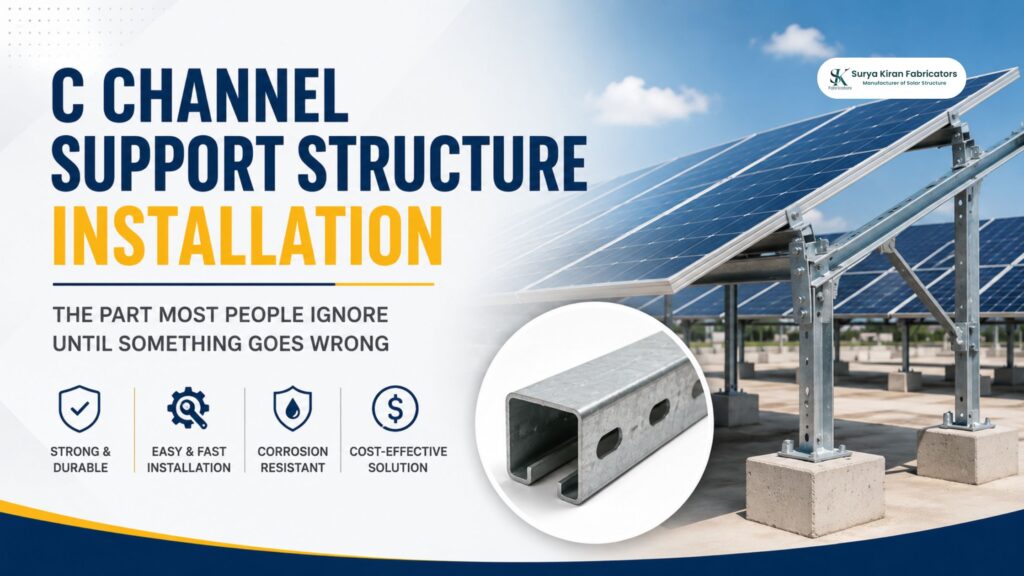
This is where C Channel Support Structure Installation system comes in. It doesn’t matter if you’re doing a rooftop solar installation or a ground solar installation or an industrial system—having the support system right is more important than what most people think.
What is C Channel Support Structure Installation?
C Channel support structure installation means putting C shaped steel support systems or steel channels in place for support for solar panels or other structures. Channels are designed in a C shape. However that shape may look, it serves an important purpose. The channel shape does provide structural support while keeping the system lightweight compared to other systems.
Common Applications for These Support Channels
- Solar panel installation
- Industrial support systems
- Roofing
- Cable tray systems
- Heavy-duty mounting
Think of support channels like a house’s foundation. It’s hidden, so you don’t notice it daily, but you will definitely hear complaints if there’s something wrong.
Why are C Channels Used in Solar Projects
Solar installations are no longer the same as they were a few years ago. Systems have become larger, customers want longer lasting systems, and the weather has become more unpredictable.
These reasons and more are why C channel installation has become popular.
Strength without the Added Weight
These channels offer great strength for their weight.
The shape of the channel helps distribute load effectively without adding weight to the channel.
Quicker to install
Channels also come the way you prefer, whether that means pre-punched or to whatever dimensions you require.
This saves a lot of time on the site, since less cutting and drilling will be required.
More Resistant
Compared to other materials, channels, that are galvanized are more corrosion resistant and survive the weather better.
More Affordable Long-Term
People usually concentrate on the initial outlay during the installation and totally forget what the repairs will cost in three to four years.
That small difference matters.
The Procedure for Installing C Channel Support Structures
Assembling a structure isn’t just as easy as the snap-together construction of the metal parts and fastening with bolts.
There is a system to the procedure.
Step 1: Go to the Site and Check First
Before starting C channel support structure installation, the engineers have to go to the actual location and check it.
Common checks are made for:
- Soil health
- Roof capacity
- Space
- Exposure
- Sun placement
- Load requirements
Skipping this step can cause bigger problems.
I’ve seen cases where everything during install looked great, but issues within a few months started coming up due to the wrong roof load calculations.
Step 2: Structural Planning
Specialists determine various structural load calculations such as:
- Dead Load
- Live Load
- Wind Load
- Angle of Tilt
- Channel Thickness
Each project is different. For example, the supports needed for a residential rooftop project versus a massive industrial solar project are not going to be the same.
Step 3: Choosing Materials
The materials chosen can define how long the structures last as well as how well they perform.
The most common materials chosen are:
- GI
- Mild Steel
- Hot Dip Galvanized Steel
GI is the most affordable, but is not very strong. Mild steel is strong but has to be coated to prevent rust. Hot Dip Galvanized Steel is the best of all three as it is durable, has great corrosion resistance, and needs little maintenance.
Step 4: Foundation Building
Every structure needs a strong base.
Some foundations can include:
- Concrete
- Anchor Bolts
- Ground Screws
- Chemical Fasteners
Weak foundations can cause stress to the entire structure. Even the best quality channels cannot make up for poor support.
Step 5: Channel Installation
This involves installing the C channels.
The channels are:
- Positioned according to design
- Properly aligned
- Fixed with supports
- Fastened
C clips aligned incorrectly can cause fitting problems for the panels in the future.
Step 6: Final Inspection
Before the installation of the C channel support structure is complete, the professionals conduct inspections on the following:
- Bolt tightness
- Welding
- Alignment of the structure
- Finishing quality of the surface
- Overall support and stability
The final check is there to catch any issues that may develop into concerns down the line.
Common Mistakes That Create Problems Later
Most people think the use of cheap materials is the source of failures.
This is not always true.
At times, the real issue stems from small mistakes that may go unnoticed.
Not Accounting for Wind
Strong active winds create continuous pressure on structures.
Without the correct calculations, movement is inevitable.
Using Thin Channels
Trying to reduce costs with thinner materials may affect strength and stability.
Alignment Issues
Misalignment of channels results in the development of uneven pressure.
Weak Connections
Loose bolts result in unstable structures as a result of vibrations and movement.
Neglected Rust Protection
Rust manages to eat away at the structural performance over time.
The frustrating part of all these issues is that they never appear on the spot.
Everything may seem fine during the first inspection.
Why Local Experience Makes a Difference
Weather patterns are not the same across the globe.
A structure that is designed and built for one region may not have the same effect in another.
Dust, rain, winds, and other ambient conditions all require planning of the installation.
If you are looking for a solar structure company in Sadulshahar, taking the one who has actual experience in the region may be beneficial.
Why Our Customers Select Surya Kiran Fabricators
When people talk about fabrication, they usually focus on steel quality. But the process matters.
Surya Kiran Fabricators goes about support structure fabrication and installation by understanding the bigger picture and ensuring support structure steel fabrication is done right.
Whether it is the installation of a C channel support structure or some other requirement that entails customized fabrication work, examining structural details will affect the performance of the system for years.
Some things your customers will be interested in include:
- Quality of the material.
- Strength of fabrication.
- Accuracy of structural design.
- Correct installation.
- Long-term durability.
Good fabrication work is typically unnoticed because everything remains stable and performs work in the same manner as before.
That is a good thing.
Direction of business- https://share.google/oKOGS5fnXihzWFJyk
Maintenance Recommendations After Installation
Properly constructed strong structures should be checked on and maintained periodically.
Basic maintenance will eliminate most of the issues that you may come across.
Some tips include:
Inspections of bolts every couple of months.
Look for signs of rust.
Remove dirt and debris.
Welding should be inspected.
Movement, bending, and other deflections.
The maintenance that is needed will always take way less time than rebuilding a structure that has been damaged.
Is C Channel Support Structure Installation a Good Investment?
Short answer: With the way this support system is going to care for the panels, yes. It is going to affect:
Safety.
Stability of structures.
Performance of solar panels.
Cost of maintenance.
Return on investment in the long-term.
People spend hours on research to find the perfect solar panels and literally put in no effort into the search for the framework that supports the panels. That seems very backwards.
Panels generate power.
The structure supports those panels throughout the years of heat, dust, rain, and strong uplifting winds.
Frequently Asked Questions
1. What is C channel support structure installation?
The C channel support structure installation is the act of putting the C shaped steel channels in supporting systems so that solar panels and structures may remain strong and stable.
2. Why is C channel installation used in solar projects?
C channel installation remains a preferred choice due to its strength, simplicity of assembly, durability, and ability to accommodate higher loads.
3. What material is best for support structures?
Hot-dip galvanized steel is oftentimes preferred due to long life and excellent corrosion resistance.
4. What is the lifespan of a C channel structure?
When installed properly and when maintenance is performed regularly, a C channel structure has a lifespan of 20–25 years.
5. What should I consider when selecting a solar structure company?
When selecting a solar structure company, you should not only consider the price of the material. You should also consider the quality of the installation and materials, the experience of the company with the project, the structural planning, and reviews from previous customers.
Final Thoughts
Support structures are only noticed when the structures they support fail.
These structures endure the changing weather conditions, dust, and the weight of everything above them.
The placement of a C channel support structure is the last step of a protective system for everything that is the top of the structure.
The best support structures are the ones that are the strongest while remaining unnoticeable, doing their job as years pass.