
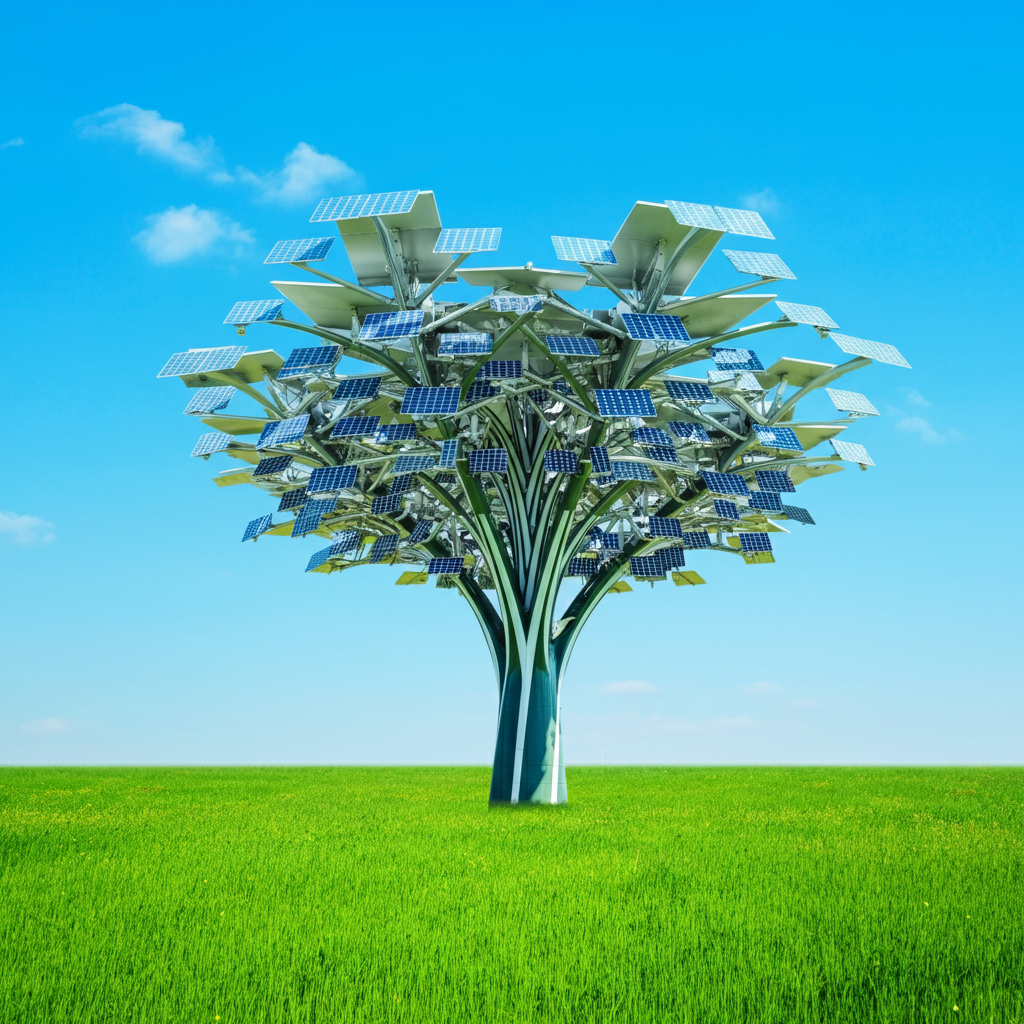
Mastering Solar Panel Structure Design for Maximum Output

Solar energy has emerged as one of the most economical and environmentally friendly energy options as the globe moves toward renewable energy. The solar panel structure design that supports the solar panels is just as important as the solar panels themselves in any solar system. Long-term performance, efficiency, and durability all depend on a well-engineered design. Even the most sophisticated solar panels might not perform to their maximum capacity without the proper construction.
The basics of solar panel structure design, its significance, types, materials utilised, design considerations, difficulties, and upcoming advancements influencing the solar industry will all be covered in this article.
What is Structure Design for Solar Panels?
The engineering and installation of mounting systems that secure solar panels in position is referred to as solar panel structure design. These frameworks are in charge of making sure the panels stay stable, point in the proper direction, and resist weather elements, including wind, rain, and snow.
The effectiveness of a solar panel is mostly dependent on the structure’s design in addition to its technology. Inadequate structural planning might result in frequent maintenance, energy losses, and even panel damage.
The Value of Designing Solar Panel Structures
1. Optimises Energy Production
Panels are slanted appropriately to receive the most sunlight possible throughout the day and in all seasons when the construction is designed properly.
2. Strengthens Sturdiness
Solar panels are shielded by a sturdy structure against weather conditions like strong winds, dust storms, and extremely high or low temperatures.
3. Economicalness
A greater return on investment (ROI) is ensured by good design, which lowers maintenance costs and stops premature damage.
4. Security
Accidents like panels collapsing or separating during storms are avoided with a sturdy construction.
5. Expandability
Future solar system growth is made simple by well-designed buildings.
Elements of the Design of Solar Panel Structures
Generally speaking, a solar panel structure is made up of several crucial parts that all work together to provide stability and performance:
1. Mounting Rails: The framework that secures the panels.
2. Secure the solar panels to the rails using clamps.
3. Support Beams: These offer stability and uniform weight distribution.
4. Foundation/Base: This serves as the ground or roof anchor for the entire construction.
5. Tilt Mechanism: Modifies the solar panels’ angle for optimal exposure to sunlight.
Solar Panel Structure Design Types
1. Structures Mounted on Roofs
One of the most popular forms of solar panel structure designs is roof-mounted, particularly in urban and residential settings with constrained space. These systems do not require new land because they install solar panels on existing roof space. Sloped roof mounts minimise structural changes by following the roof’s natural angle, but flat roof mounts typically utilise slanted frames to tilt the panels for optimal sunshine exposure. Roof-mounted solutions are perfect for small enterprises or homeowners since they save money and space. To guarantee efficiency and safety, they must be carefully evaluated for orientation, load capacity, and roof strength.
2. Structures Mounted on the Ground
Large-scale solar farms, industrial sites, and open-field installations frequently use ground-mounted structures. These buildings, in contrast to rooftop designs, are grounded on solid foundations that offer superior support and endurance. They provide tilt angle and orientation flexibility, enabling panels to be positioned for year-round optimal performance. While adjustable-tilt ground mounts enable seasonal relocation for increased energy generation, fixed-tilt ground mounts are the most basic type, with panels remaining in one place. Compared to roof-based systems, ground-mounted structures are more efficient and easier to maintain, but they also require more land and cost more to build.
3. Structures Mounted on Poles
Pole-mounted solar systems use one or two poles to raise panels above the ground. Because the elevated location enhances sunshine capture, this design is appropriate for spaces that are constrained or where shadowing is an issue. Due to its tiny size, single-pole installations are frequently utilised in off-grid or domestic settings. In contrast, dual pole mounts offer more stability and can support larger solar panels, which makes them appropriate for community-level solar projects for rural electrification. Another advantage of pole-mounted structures is that they are less obstructed by plants or trash, making panel cleaning simpler.
4. Monitoring Frameworks
Advanced solar panel designs known as tracking structures follow the path of the sun throughout the day to optimise energy output. In contrast to fixed systems, tracking systems constantly modify the angle of the panel to maximise solar exposure. Panels are rotated from east to west by single-axis trackers, which significantly increase efficiency without requiring complicated systems. By adjusting panels both horizontally and vertically, dual-axis trackers go one step further and guarantee optimal solar capture all year long. Tracking structures can boost solar energy generation by 20–40%, which makes them ideal for utility-scale solar farms and high-investment projects, despite their higher cost and ongoing maintenance requirements.
Design Factors for Structures with Solar Panels
To guarantee performance and safety, engineers take into account several criteria while constructing a solar panel structure:
1. Capacity to Support Weight
In addition to bearing the weight of the solar panels, the structure must be able to endure outside forces like wind and snow.
2. Resistance to Wind
Stronger foundations and aerodynamic designs are necessary in storm-prone areas to minimise uplift.
3. Angle of Tilt
Sunlight capture depends on the angle at which the panels are positioned. The ideal tilt usually corresponds to the latitude of the site.
4. Orientation
For optimal efficiency, panels should face true north in the southern hemisphere and true south in the northern hemisphere.
5. The expansion of heat
Structures must take flexibility into account without sacrificing stability because materials expand and contract in response to temperature variations.
6. Maintenance Accessibility
Without disassembling the system, structures should provide simple access for maintenance and cleaning.
What are the Difficulties in Designing Solar Panel Structures?
1. Severe weather conditions
It can be difficult to design for harsh environments like deserts or areas with a lot of snow.
2. Restrictions on Space
Creative structural solutions are needed in metropolitan locations where there is a shortage of ground or roof space.
3. Expense Control
Affordability and durability are still difficult to balance.
4. deterioration and rust
Coastal structures need specific coatings since they are more likely to rust.
5. Adherence to Regulations
The design process is made more difficult by the need to adhere to local safety regulations and building laws.
Advances in the Design of Solar Panel Structures
Structure designs are always changing along with the solar business. Among the most recent developments are:
1. Solar Structures That Float
Floating platforms are used to put panels on bodies of water. As a result of water cooling, less land is used and efficiency is increased.
2. Building-Integrated Structures (BIPV):
Solar panels are incorporated straight into windows and facades.
3. Intelligent Monitoring Systems
Trackers driven by AI and IoT maximise energy generation by optimising panel movement.
4. Composite Lightweight Frames
New materials are stronger and lighter, which speeds up and lowers the cost of installations.
Top Techniques for Designing Solar Panel Structures
1. Analysis of the Site
Before completing the design, thoroughly evaluate the shading, soil conditions, and wind speed.
2. Selection of Materials
Select materials that are appropriate for the local environment, such as metals that don’t corrode in coastal regions.
3. Conformity to Standards
Observe local building codes and international standards such as IEC and UL.
4. Sustainability
When feasible, choose recyclable parts and environmentally friendly materials.
5. Future-Proofing
Scalability should be considered while constructing structures so that more panels can be added later without requiring a system redesign.
Conclusion
A solar panel structure design is the foundation of any solar energy system, serving as more than just a supporting frame. The success of solar projects is greatly influenced by the design, which ensures longevity and safety while optimising energy output. An economical and durable solar installation can be accomplished by taking into account elements like orientation, material selection, and environmental circumstances.
As technology develops, new developments such as AI-powered trackers and floating solar platforms will further transform the architecture of solar panel structures, increasing the efficiency and accessibility of solar energy globally.