
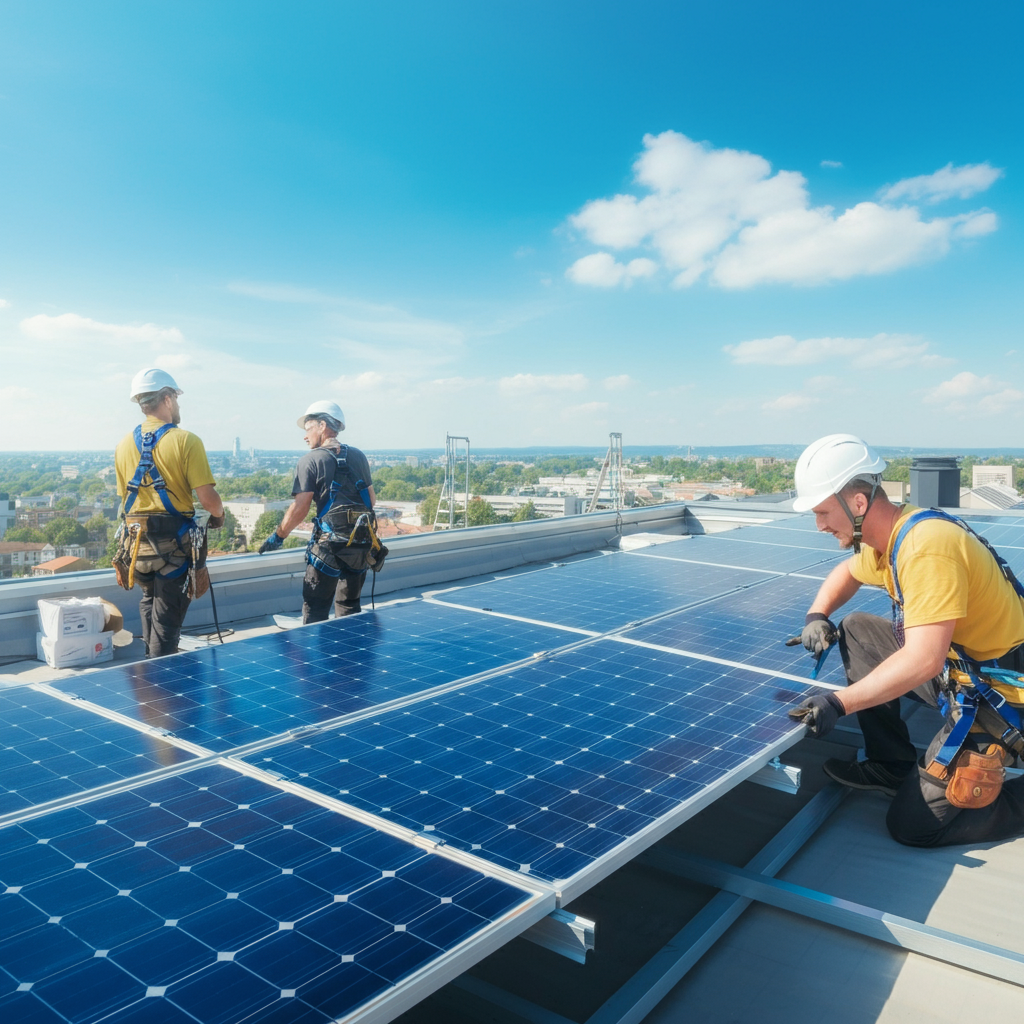
Solar Structure Installation: Process, Materials & Best Practices
As the global push for clean energy intensifies, solar power has emerged as a leading solution for both residential and commercial energy needs. However, the efficiency and longevity of solar power systems do not solely depend on the panels alone. One of the most critical components of a solar setup is the solar structure, the mounting framework that supports the panels.
Solar structure installation involves assembling and securing these mounting systems in a way that maximises sun exposure, ensures durability, and withstands weather conditions. Whether it’s a rooftop array in a home or a vast ground-mounted installation in a solar farm, proper solar structure installation is key to overall system performance.
Why Solar Structure Installation Matters?
Solar structure installation plays a crucial role in the overall efficiency, durability, and safety of a solar power system. The mounting structure is responsible for holding the solar panels securely in place, ensuring they are positioned at the optimal tilt and orientation to capture maximum sunlight throughout the day.
A well-installed solar structure minimises energy losses, protects against strong winds, rain, and seismic activity, and ensures the panels remain stable and undamaged for decades. Furthermore, proper installation helps in reducing long-term maintenance costs, prevents structural issues such as roof leakage or ground subsidence, and ensures compliance with safety standards and building regulations. In essence, without a properly installed structure, even the highest-quality solar panels cannot perform at their best, making solar structure installation a vital step in any successful solar energy project.
Types of Solar Mounting Structures
1. Rooftop Solar Structures
Rooftop solar structures are designed to be installed on the roofs of residential, commercial, or industrial buildings. They are ideal for areas with limited ground space and offer the benefit of utilising unused rooftop real estate. These structures can be either fixed tilt or adjustable, depending on the roof type and orientation. There are three common configurations: flat roof structures that often use ballast or tilt frames, sloped roof structures where panels follow the roof angle, and elevated structures that create additional space beneath for shade or storage. The choice depends on factors like roof strength, material, and local climate.
2. Ground-Mounted Solar Structures
Ground-mounted solar structures are installed directly on the ground and are typically used for large-scale installations or in locations with ample open space. These systems involve setting up a strong foundation using concrete or ground screws, followed by mounting solar panels on a steel or aluminium frame. They provide flexibility in orientation and tilt angle, making it easier to optimise sunlight capture. Ground-mounted systems are common in solar farms, agricultural fields, and large commercial properties, and can be installed with or without tracking systems.
3. Pole-Mounted Solar Structures
Pole-mounted systems are a subtype of ground-mounted structures where panels are fixed on a single pole or multiple poles anchored into the ground. These structures are often used in uneven terrain or remote areas where traditional ground mounts are impractical. Pole-mounted systems offer better airflow beneath the panels, which can improve efficiency, and are sometimes equipped with manual or automated tracking systems to follow the sun’s path for higher energy output.
4. Tracking Solar Structures
Tracking systems are advanced mounting structures that follow the sun’s movement across the sky to increase energy capture. They can be single-axis, tracking east to west, or dual-axis, adjusting both horizontally and vertically. Although more expensive than fixed structures, tracking systems significantly boost energy yield, especially in regions with high solar irradiance. These are most commonly used in utility-scale solar farms where maximising output is critical for return on investment.
5. Floating Solar Structures
Floating solar structures are innovative systems that allow solar panels to be installed on bodies of water such as lakes, reservoirs, or ponds. These setups use buoyant platforms that support the solar panels and mounting frames. Floating systems are particularly useful in areas with limited land availability and also help in reducing water evaporation from the surface. Additionally, the cooling effect of water can enhance the efficiency of the panels. However, they require careful engineering to handle wave motion, water currents, and environmental impact.
Step-by-Step Solar Structure Installation Process
Step 1: Site Survey and Design Planning
The installation process begins with a thorough site survey conducted by solar professionals to assess the location’s suitability. This includes evaluating the available space, shading from nearby trees or buildings, the angle of sunlight exposure, roof or ground strength, and local weather patterns. Based on these insights, a customised system design is developed that includes the optimal orientation, tilt angle, and structural layout to ensure maximum energy generation and structural stability.
Step 2: Structural Design and Material Procurement
Once the site assessment is complete, detailed engineering drawings and structural plans are prepared. These plans specify the type of mounting system, the materials to be used (such as aluminium or galvanised iron), and the required fasteners and supports. Following this, the necessary materials are sourced and delivered to the site, ensuring they meet industry standards and are compatible with the solar panels being installed.
Step 3: Foundation Preparation
For ground-mounted systems, foundation preparation involves soil testing, excavation, and setting up concrete footings or screw piles to anchor the mounting structures. In rooftop systems, installers identify strong anchor points like rafters or purlins to support the base plates. Waterproofing materials may be applied to prevent roof leakage, especially for penetrating mounts. The foundation phase ensures the structure can withstand environmental forces like wind and seismic activity.
Step 4: Mounting Structure Assembly
With the foundation in place, the structural frame is assembled on-site. This includes installing rails, brackets, and support beams according to the design plan. Precision tools such as spirit levels and torque wrenches are used to ensure perfect alignment and stability. The entire framework is double-checked for strength and balance before solar panels are mounted, reducing the risk of future misalignment or structural issues.
Step 5: Panel Installation
Solar panels are carefully mounted onto the assembled structure using clamps, bolts, or mounting clips. Installers ensure each panel is securely fixed without exerting excessive pressure that could cause micro-cracks. Proper spacing is maintained between panels for ventilation and heat dissipation, which helps in improving performance. At this stage, care is taken to align the panels correctly with the tilt and direction for optimal sunlight exposure.
Step 6: Wiring and Electrical Connections
Once the panels are in place, electrical wiring is carried out to connect the panels in series or parallel, depending on the system’s voltage and current requirements. The DC electricity generated by the panels is routed to the inverter, which converts it to AC power. In grid-connected systems, the inverter is also linked to the main electrical panel or utility meter. All connections are insulated, and grounding is performed to ensure electrical safety.
Step 7: Inspection and Commissioning
The final step involves a comprehensive inspection of both the mechanical and electrical components. Technicians verify the structural integrity, ensure all bolts and fixtures are secure, and check electrical output to confirm proper functioning. The system is tested for performance under sunlight, and safety features like circuit breakers and surge protection are inspected. Once approved, the system is commissioned and either connected to the grid or activated for standalone use.
Applications of Solar Structures
1. Residential Use
Solar structures in residential settings are primarily used for rooftop installations on individual homes and apartment buildings. These systems allow homeowners to generate their electricity, reduce utility bills, and contribute to a sustainable future. Rooftop structures can be installed on sloped or flat roofs and are often tailored to match the building’s architecture. Some homeowners also opt for elevated structures like solar carports or pergolas, which provide shade and functionality while generating clean energy.
2. Commercial & Industrial Use
In commercial and industrial environments, solar structures are deployed on large rooftops of factories, warehouses, malls, and office buildings. These installations help businesses reduce their operational costs, meet sustainability goals, and sometimes even comply with environmental regulations. Ground-mounted solar structures are also common in industrial parks with open land. Additionally, solar carports in commercial complexes provide dual functionality by generating electricity and offering covered parking.
3. Agricultural Use
Solar structures play a crucial role in agriculture by powering water pumps, irrigation systems, and cold storage units. Ground-mounted structures are commonly set up in farmlands to take advantage of unused open spaces. A notable trend is agro-photovoltaics, where solar panels are elevated above crops, allowing simultaneous farming and energy production. These installations not only increase land use efficiency but also offer shade that can benefit certain crop types.
4. Utility-Scale Projects
Utility-scale solar structures are large-scale installations designed to generate massive amounts of electricity for distribution into the grid. These projects often span several acres and use ground-mounted or tracking systems to optimise energy production. The structures are engineered to handle environmental stresses like high winds, earthquakes, and extreme temperatures. Utility-scale applications are vital for meeting regional and national renewable energy targets and are typically backed by government policies and long-term power purchase agreements.
Conclusion
Solar structure installation is a critical step that defines the efficiency, safety, and longevity of your solar power system. Whether it’s a small rooftop installation or a utility-scale project, selecting the right structure type, using quality materials, and following best installation practices can ensure long-term returns on your solar investment.
With governments offering subsidies, net metering policies, and growing environmental awareness, there’s never been a better time to invest in solar energy, and it all starts with a reliable solar structure installation.