A solar panel mounted on a rooftop can only perform as well as its supporting structure. Attention is only paid to the photovoltaic panel when in reality, it is the rooftop solar mounting structure design that keeps it upright during monsoon, resists wind uplift and movement during strong winds, and keeps the roof intact.
This article focuses on the design aspects of the rooftop mounting structure rather than the panel itself.
What a Rooftop Solar Mounting Structure Design Actually Does
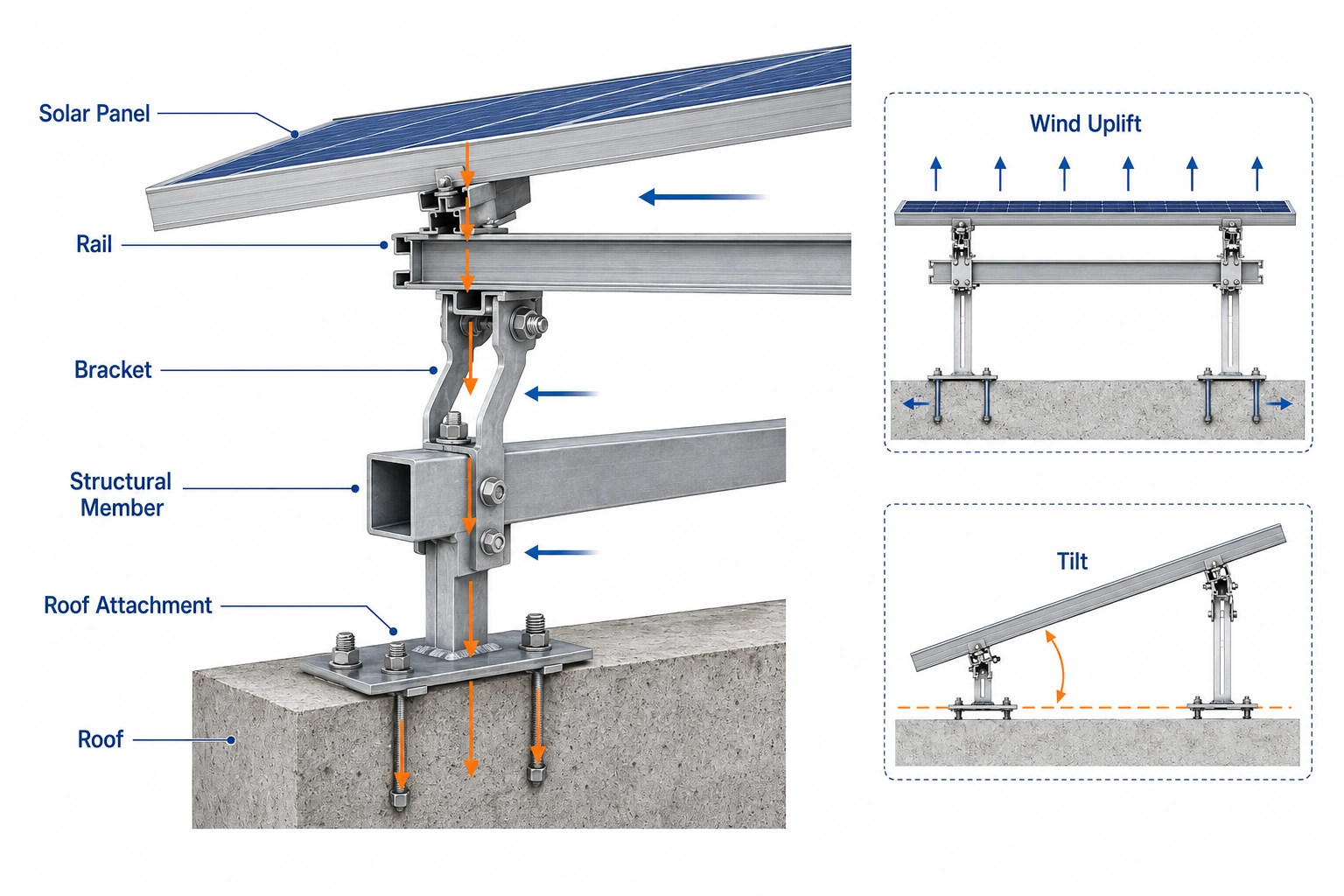
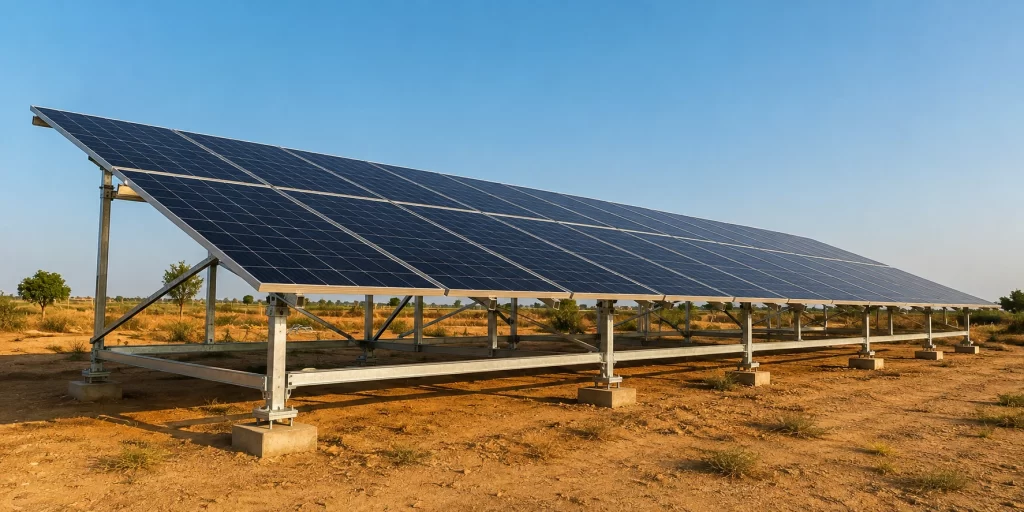
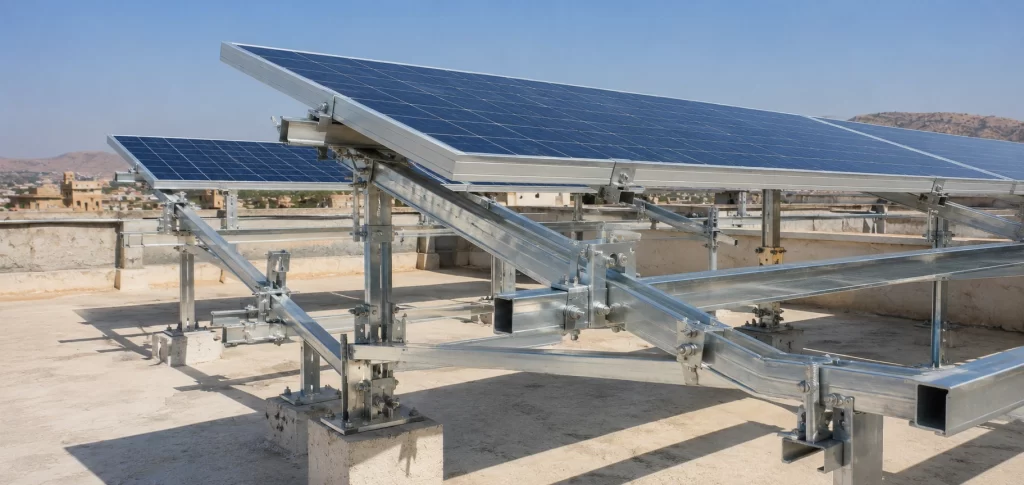
While it is simple to identify a rooftop mounting structure at first glance, there are a few nuances to its design. A rooftop solar mounting structure design needs to
- Support the required panel tilt and orientation for the site
- Bear the panel’s weight
- Withstand wind loads
- Be attached to the roof without damaging its integrity
- Resist corrosion due to exposure to the elements
The performance of these factors is crucial to the lifetime of a solar panel. Any aspect done incorrectly renders all the effort put into the panel useless.
A rooftop mounting structure’s design varies depending on the type of the roof it is mounted on.
Design Depends on the Roof Type
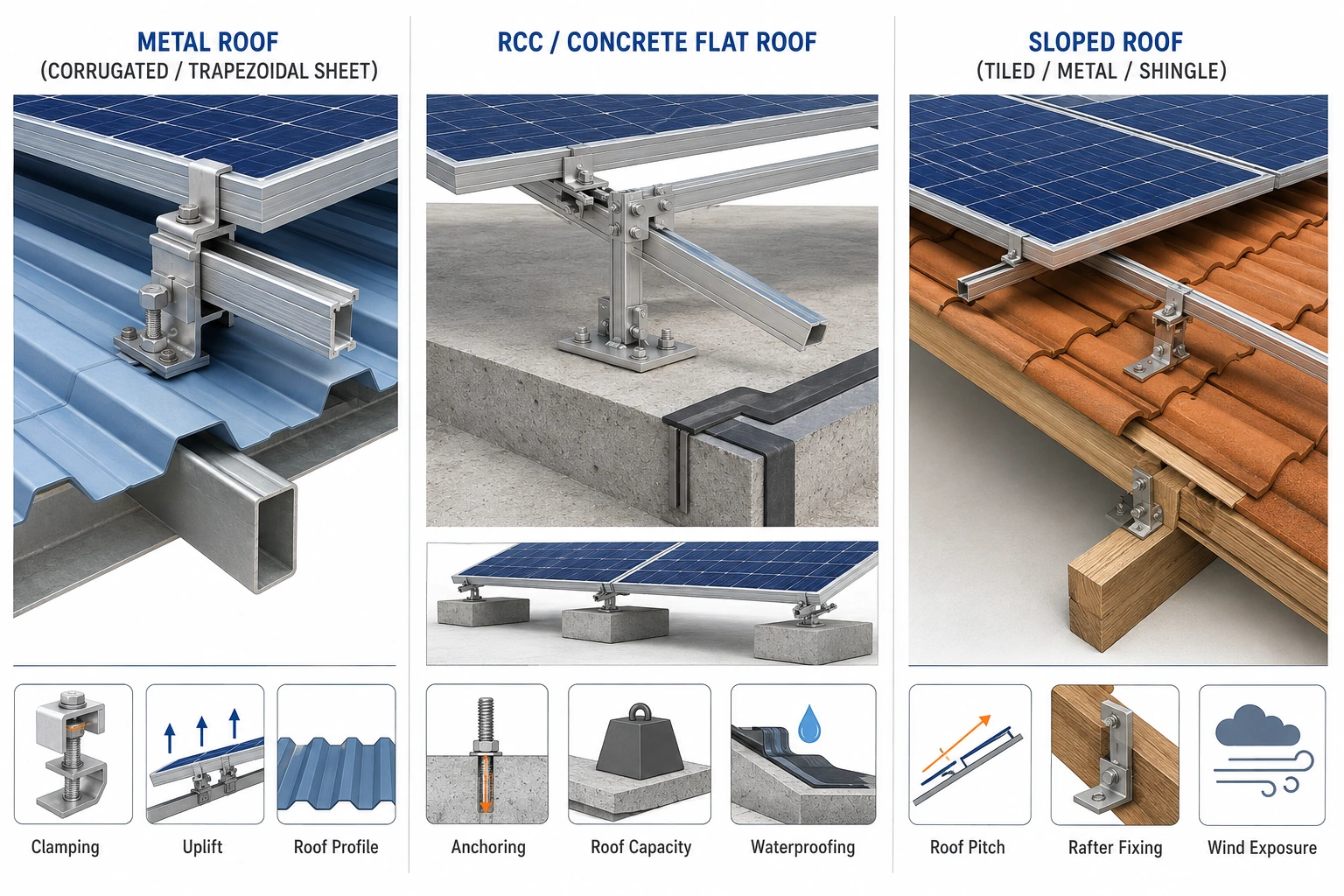
Depending on the roof, there are a few recommended mounting structures.
Metal Sheet / Tin Shed Roofs
Popular with industrial and agricultural buildings, such structures require specialized clamps that attach to the roof sheathing. It is necessary to use specialized mounting equipment to avoid piercing the metal roof, thus damaging its integrity.
RCC / Concrete Roofs
Anchors drilled into concrete or reinforced concrete (RCC) roof slabs are a popular choice for mounting solar panels on such surfaces. It offers more flexibility in terms of adjustability in tilt and orientation than metal sheet or tin shed roofs.
Sloped Residential Roofs
On a sloped roof, the general practice is to align the mounting structure with the roof’s tilt. It reduces both the complexity of the structure as well as the risk of wind-lifting.
Materials Used in Rooftop Mounting Structures
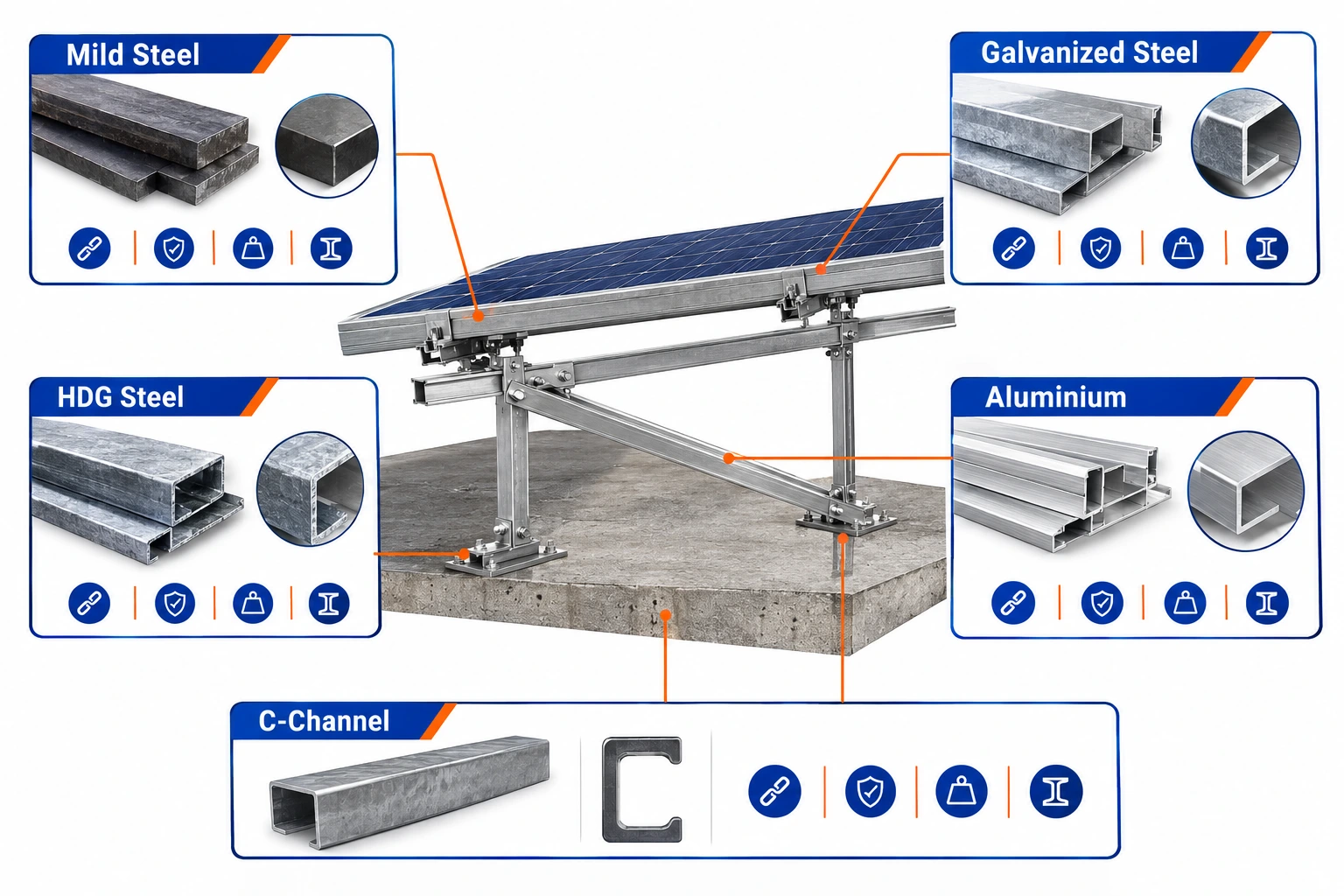
The material of the mounting structure is a deciding factor in how long it will last. Below is a list of commonly used materials:
| Material / Profile | Key Characteristics | Typical Rooftop Use |
| Mild steel | Strong, economical, requires corrosion protection | Cost-sensitive structures where adequate coating is provided |
| Galvanized steel | Zinc-coated for improved corrosion resistance | General rooftop installations |
| Hot-dip galvanized steel | Protective zinc coating applied by hot-dip process | Long-term outdoor structures |
| Aluminium | Lightweight and corrosion-resistant | Applications where weight reduction is important |
| C-channel / structural profiles | Efficient structural section, available in different materials and gauges | Rails, frames and primary/secondary members depending on design |
While the coating of a material is important, its thickness and structural properties are equally important. Even though it is tempting to opt out of expensive materials, a badly fabricated structure made of cheap material will not yield the desired results.
Why Climate Changes the Design
A rooftop solar mounting structure designed for the hot and dusty conditions of Rajasthan may need different material and protection considerations than one installed in a humid and high-rainfall region such as Assam. Rajasthan’s high temperatures, dust exposure, and seasonal temperature variation can affect coatings, connections, and long-term durability, while higher moisture and rainfall can increase the importance of corrosion protection in more humid environments.
Therefore, material selection and structural design should be based on the actual environmental and site conditions of the installation. It is always advisable to consult qualified professionals to ensure that the mounting structure is suitable for the local wind conditions, roof type, and roof load-bearing capacity. Avoid choosing low-cost structures that compromise on material quality, corrosion protection, structural design, or installation quality.
How to Choose a Structure – Not Just a Price
Before finalizing any rooftop solar mounting structure design, check:
- Steel grade, thickness, and coating type – the specifics behind the material, not just its name
- Wind-load rating appropriate for your specific area- not some generic industry average
- Whether the mounting method is compatible with your roof type – tin shed, RCC, or sloped each often require completely different installations
- The manufacturer’s experience with local conditions such as wind and weather – real-world experience often points out potential weaknesses not indicated by specifications.
A cheaper structure that skips any of these isn’t really a saving. It’s a cost deferred to the first bad storm.
The Bottom Line
While the solar panel itself may be the star of the show, it is the rooftop mounting structure that keeps it there. Rooftop solar mounting structure design must be approached as a careful balancing act of choosing the proper materials, coatings, and fittings based on the requirements and limitations of the installation site.
Planning a rooftop solar installation?
If you need help selecting a suitable mounting structure for your roof and local conditions, view our business profile to learn more about our services and get in touch.